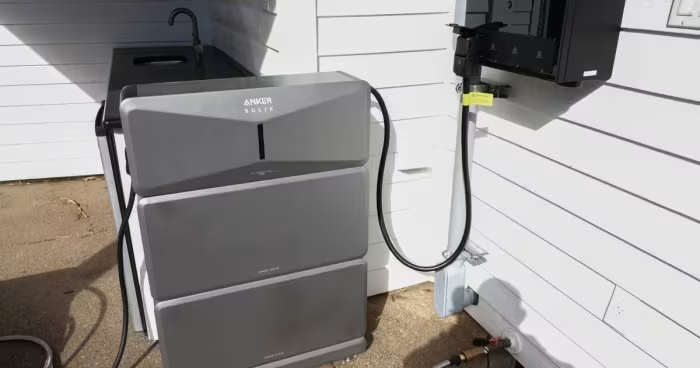
Anker Solix E10 Review
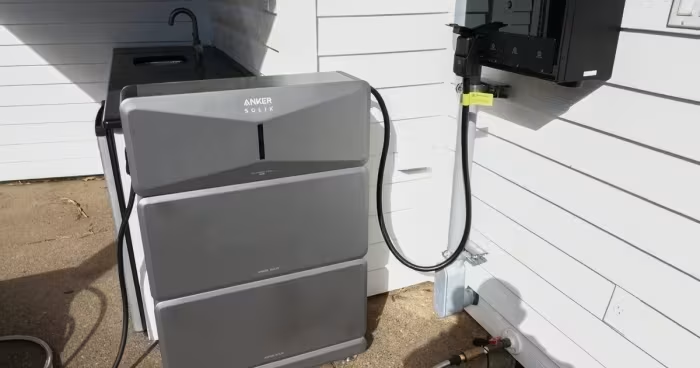
Anker Solix E10
A modular, scalable whole-home backup power system designed for seamless outage protection and residential energy management.
How This Score Is Calculated
- Sources analysed: 5 reviews
- Sentiment-only: 5 sources (weighted 1.0×)
- Split: 4 Positive · 1 Mixed · 0 Negative
- Raw weighted average: 7.8
- Formula: Σ(score × weight) ÷ Σ(weight)
- Final score: 7.8/10 (rounded to 1 decimal)
- Most reviewed featureModularity (5/5)
- Most praisedSeamless transition
- Most criticisedInstallation complexity
- Reviewer consensus levelHigh
The Anker Solix E10 stands out as a highly modular and scalable whole-home backup solution that effectively eliminates the noise and emissions associated with traditional gas generators. Its ability to handle heavy appliance surges and provide a seamless transition during power outages makes it a top-tier choice for reliable residential backup. While it requires professional installation and carries a high initial investment, its flexibility and ease of use in daily energy management provide significant long-term value.
🔧 Key Specifications
- System Type: Modular whole-home backup
- Battery Module Weight: 130 lbs per unit
- Offline Capability: Yes (Bluetooth local access)
- Installation: Professional/Technical required
- Compatibility: Solar array integration, Smart Generator 5500
- Warranty: 5 years
💲 Price Range
Approximately ₹4,85,000
Prices sourced from reviews. Check current retailer pricing.
📊 What Reviewers Say — Feature by Feature
3 features evaluated across 5 sources.
👍 Key Strengths
- Seamless power transition during outages
- Highly modular and scalable design
- Handles heavy appliance surges
- Quiet, emission-free operation
- Offline operational capability
👎 Key Weaknesses
- Heavy 130-pound battery modules
- Requires professional installation
- Stingy 5-year limited warranty
- App interface has learning curve
- Inaccurate earnings and usage data
💰 Value for Money Analysis
While the initial investment is high, the E10 is viewed as a more affordable and flexible alternative to complex, expensive legacy systems like Generac or Tesla Powerwall. It offers long-term economic value through grid-export optimization.
3 of 5 sources commented on price or value.
⚡ Where Reviewers Disagreed
The following areas saw meaningful disagreement across sources.
- Affordability: 2 sources label it as relatively affordable/flexible, while 2 sources highlight the high initial investment/expense. The disagreement hinges on whether the product is compared to premium whole-home systems (where it is cheaper) or general consumer electronics (where it is expensive).
🎯 Who This Product Is For
🛠️ Best Use Cases
- Whole-Home Backup Highly effective for running essential appliances during outages, including heavy loads like A/C units and well pumps. Great
- Energy Tariff Management Time-of-Use (ToU) modes allow for potential cost savings by managing grid reliance. Good
🔀 Alternatives Mentioned by Reviewers
- EcoFlow Smart Gateway — Compared as having fewer smart breaker supports than the Solix E10, which offers better remote circuit control. Choose the E10 if you prioritize granular circuit prioritization.
- Span Panel — A system recognized for broader third-party compatibility than the Anker Solix E10. Choose the Span if your smart home ecosystem requires extensive third-party integration.
- Generac — A traditional, expensive legacy backup system. The Solix E10 is recommended as a more modular, flexible, and affordable alternative to this complex path.
- Tesla Powerwall — A high-cost, complex whole-home solution. Reviewers suggest the Solix E10 for those seeking a more flexible, scalable approach that avoids the high entry barrier of the Powerwall.
- Portable Gas Generators — The traditional backup method. The E10 is overwhelmingly preferred for being silent, maintenance-free, and emission-free compared to these generators.
🛒 Buyer's Guide
✅ Buy This If…
- You want a silent, emission-free whole-home backup.
- You need a scalable system that can grow with your household needs.
- You have heavy appliances like well pumps or A/C that require surge handling.
❌ Skip This If…
- You are looking for a DIY-friendly installation project.
- You require extensive third-party smart home ecosystem compatibility.
- You are strictly constrained by a tight initial budget.
⚠️ Things to Check Before Buying
- Ensure you have a professional installer available for the setup.
- Note that battery modules are extremely heavy (130 lbs each) if you plan on relocating them.
- Be aware that the warranty is limited to 5 years.
The Anker Solix E10 is a powerful, modular backup solution that excels at providing silent, seamless power during outages. Its ability to handle heavy loads and integrate with solar systems makes it a strong contender for homeowners moving away from gas generators. While the app interface and installation requirements present minor hurdles, the overall performance and flexibility provide excellent value for those seeking a scalable home power system. It is a smarter, quieter alternative to legacy systems like Generac or Powerwall.