Bluesound Powernode Review
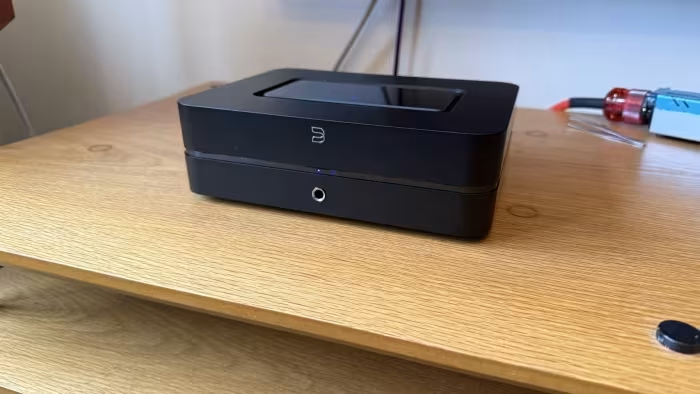
Bluesound Powernode
A versatile, high-resolution streaming amplifier that bridges the gap between convenient multi-room audio and audiophile-grade sonic performance.
How This Score Is Calculated
- Sources analysed: 13 reviews
- Raw weighted average: 8.4
- Consensus bonus +0.3: 85% sources agreed
- Final score: 8.4/10
Algorithmically calculated from source data. No manual adjustments.
- Most reviewed featureSound Quality (13/13)
- Most praisedHigh-resolution support
- Most criticisedLack of phono stage
- Reviewer consensus levelHigh
The Bluesound Powernode is widely regarded as a benchmark in the streaming amplifier category, successfully combining sophisticated high-resolution audio support with a user-friendly, multi-room ecosystem. While its design is understated and it lacks some traditional analog features like a phono stage, its sonic performance, app-based control, and flexibility make it an essential component for modern digital-first audio systems. It is consistently recommended for users who want to move beyond basic smart speakers into a true Hi-Fi experience without the clutter of traditional rack-mounted components.
🔧 Key Specifications
Specifications sourced from reviewer mentions. Verify with manufacturer for complete details.
- Power Output: 80W - 100W per channel (model dependent)
- High-Res Audio: Up to 24-bit/192kHz, MQA support
- Amplification: THX AAA headphone amp (2025 model)
- Connectivity: HDMI (ARC/eARC), two-way Bluetooth, Wi-Fi, Ethernet
- Multi-room: BluOS ecosystem
- Control: BluOS app, proximity-sensing touch controls
- Smart Integration: Google Assistant, Amazon Alexa, Crestron, Control4
- Features: Wireless rear speaker bonding (2025 model), discrete 3rd channel (2025 model)
💲 Price Range
₹53,500 – ₹1,08,000
Prices sourced from reviews. Check current retailer pricing.
📊 What Reviewers Say — Feature by Feature
Key features evaluated across 13 sources.
👍 Key Strengths
- Exceptional high-resolution audio fidelity
- Intuitive, feature-rich BluOS app
- Compact, space-saving design
- Excellent multi-room streaming support
- Versatile HDMI and connectivity options
👎 Key Weaknesses
- No built-in phono pre-amp
- BluOS app can be occasionally unstable
- Adding wireless rears is expensive
- Lacks Dirac room correction
💰 Value for Money Analysis
Reviewers generally consider the Powernode a strong investment, noting it outperforms cheaper all-in-one solutions and provides a more cost-effective path to high-end audio than buying separate streamers and amplifiers. While premium models approach the six-figure mark, the performance, flexibility, and ecosystem value justify the cost for most enthusiasts.
13 of 13 sources commented on price or value.
⚡ Where Reviewers Disagreed
The following areas saw meaningful disagreement across sources.
- Design Aesthetic: 4 sources praised the compact, inconspicuous design; 2 sources criticized it as 'unexciting' or 'cheap and insubstantial'.
🎯 Who This Product Is For
Reviewer recommendations for different target audiences.
🛠️ Best Use Cases
- Home CinemaGreat for 3.1/5.1 setups with wireless rear speaker support and HDMI ARC integration.Great
- Multi-Room StreamingExcellent for whole-home audio setups via the stable and feature-rich BluOS platform.Great
- Desktop/Nearfield Hi-FiCompact form factor makes it perfect for high-end audio setups in limited spaces.Good
🔀 Alternatives Mentioned by Reviewers
A breakdown of key competitors identified by experts.
- Sonos — Frequently cited as the main alternative for ease-of-use and reliability, though reviewers note it lacks the high-resolution audio support and audiophile-grade sound quality of the Bluesound. Choose Sonos if your priority is absolute simplicity and ecosystem breadth.
- Marantz M1 — A direct competitor to the 2025 Powernode, offering comparable power and unique AV features. Reviewers suggest it as a top choice for users specifically looking for a high-end, compact AV streaming amplifier.
- Technics SA-C600 — Considered a more 'musical' and nuanced alternative by some critics, though it lacks the expansive multi-room smarts of the Bluesound ecosystem. Choose this if musicality is your only priority.
- Naim Uniti Atom — Positioned as a higher-end, premium alternative. It offers superior build and sound but at a significantly higher price point. Choose this if budget is not an issue and you want top-tier performance.
- Marantz PM7000N — Cited as a superior alternative for soundstage and precision, though it is less 'rhythmic' and energetic than the Powernode.
Alternatives sourced exclusively from reviewer mentions.
🛒 Buyer's Guide
✅ Buy This If…
- You want high-resolution streaming in a compact, lifestyle-friendly box.
- You need multi-room audio capabilities that integrate into a wider smart home.
- You want to power high-quality speakers without needing a rack of separate equipment.
❌ Skip This If…
- You are a turntable user who requires a built-in phono pre-amp.
- You need professional-grade room correction software like Dirac.
- You are on a tight budget where a cheaper smart speaker ecosystem would suffice.
⚠️ Things to Check Before Buying
- Ensure your speakers are of sufficient quality to justify the amplifier's high-resolution capabilities.
- Check if your network stability is robust, as the BluOS app can be sensitive to dropped connections.
- Determine if you need the 2025 model's AV features (discrete 3rd channel/wireless rears) before paying the premium over the standard/Edge versions.
📈 Sentiment Trends Over Time
Reviews span from 2021 to 2025. The following changes were detected:
- Functionality — Evolution from a pure stereo streamer to a capable 3.1/5.1 AV hub in the 2025 model.
- Core Sound — Consistent praise for the 'Bluesound sound'—bold, punchy, and detailed—across all versions.
The Bluesound Powernode remains the gold standard for those seeking a 'just-add-speakers' streaming solution that doesn't compromise on audiophile-grade performance. Its ability to handle high-resolution audio, combined with the flexible BluOS platform, makes it a top-tier choice for modern music lovers. While the lack of a phono stage and the premium price for wireless rear-channel upgrades are minor drawbacks, the overall value and innovation are unmatched in its class. If you want a clean, powerful, and smart audio experience, this is the system to buy.
Top Alternative: Marantz M1 — A formidable competitor for those specifically focused on high-end AV streaming and discrete channel performance.
PLG_CONTENT_IMAGEGALLERY_ERROR_NO_IMAGES