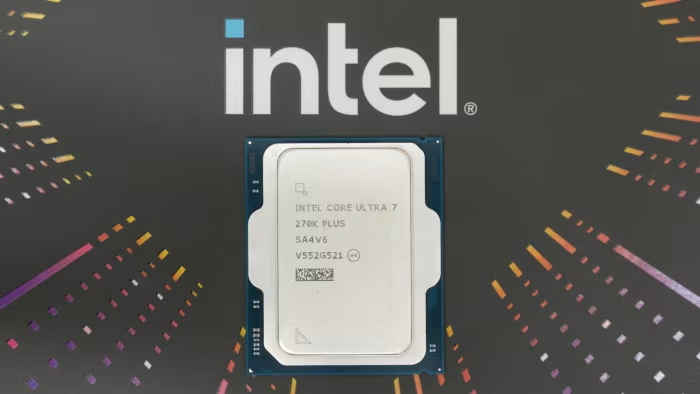
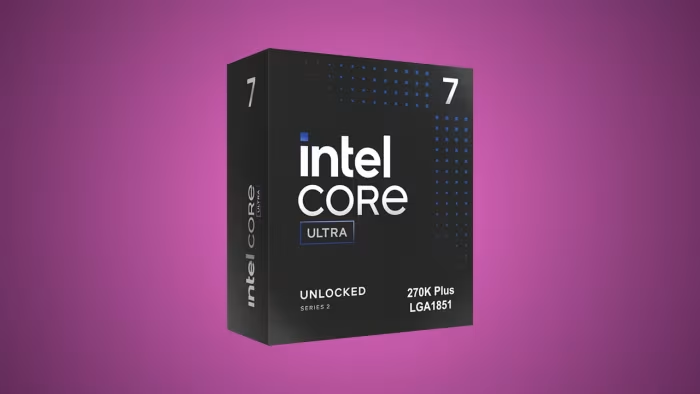
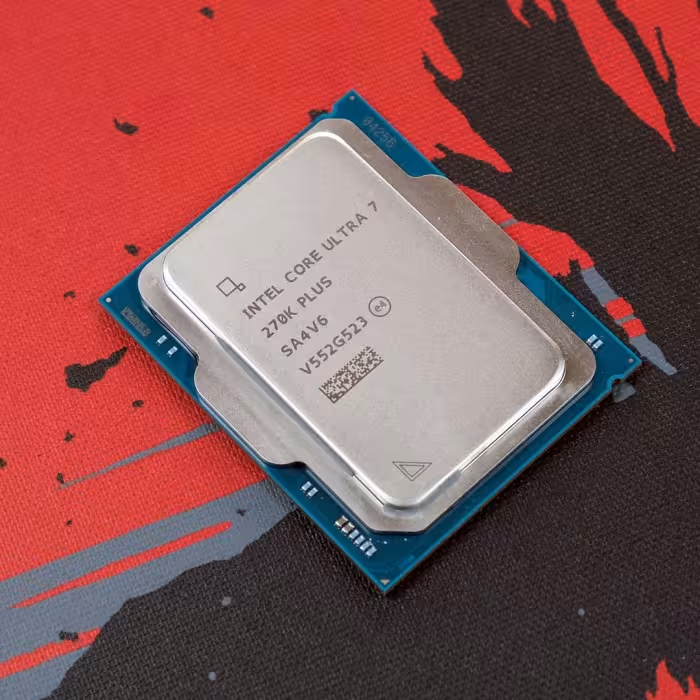
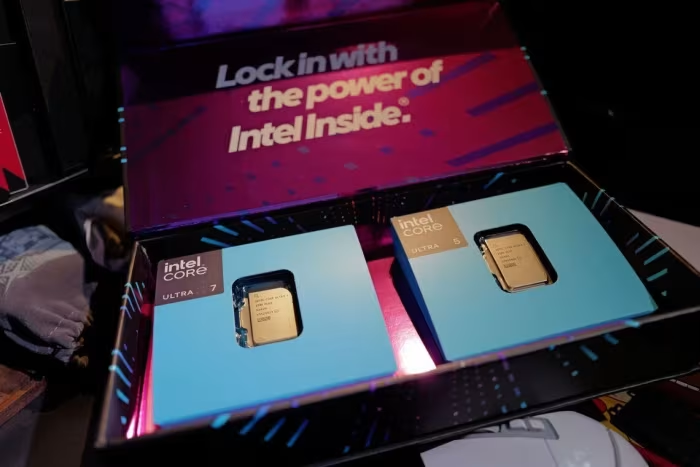
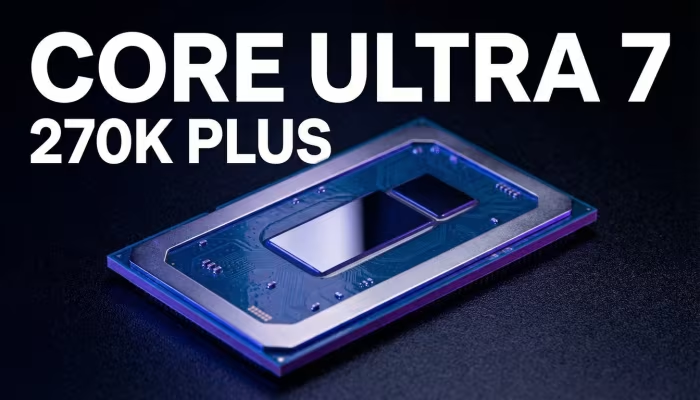
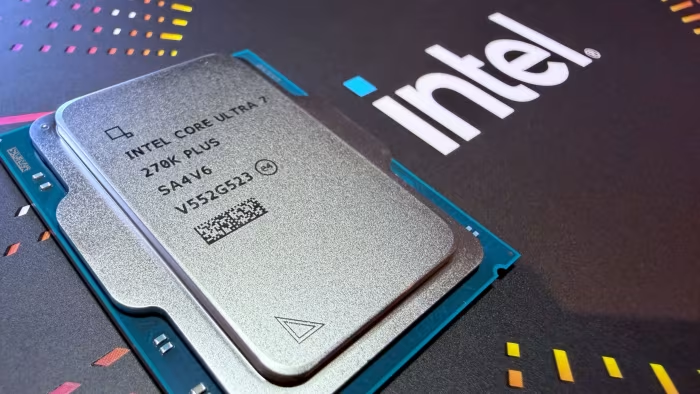
Intel Core Ultra 270K Plus Review
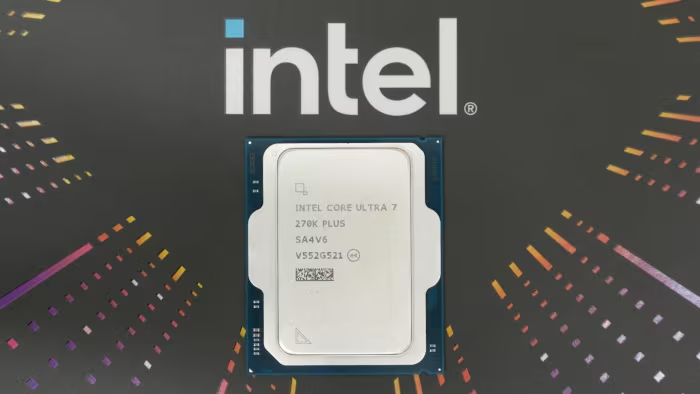
Intel Core Ultra 7 270K Plus
⚡ The Short Version
The Intel Core Ultra 7 270K Plus delivers exceptional multi-threaded productivity performance that rivals more expensive flagship chips. Users should watch for high power draw and thermal output, which necessitate a high-end 360mm AIO cooler for demanding workloads. It is a strong choice for content creators and heavy multitaskers, though gamers may find better efficiency elsewhere. Expect to pay between 299 USD and 359 USD depending on current market pricing.
The processor exhibits an average package power of 240 w during Cinebench 2024 multicore tests and a peak power consumption of 250 w under full load. Measured temperatures reach 86 °c with a 360 mm liquid cooler, while efficient-core frequency hits 4.6 ghz during all-core workloads.
- Quoted price₹25,00010 sources
- ValueGood Value7.3/10 · 42 reviews
- Best forContent creators8 reviews agree
- EvidenceStrong57 reviews · 7 hands-on
- AgreementHigh81% lean the same way
Should you buy it?
Strengths, weaknesses, who it suits and what it costs
👍 Pros and Cons in Plain Words
Reviewers highlight its strong multi-threaded performance and competitive pricing as primary benefits. Conversely, the chip is frequently cited for running hot and consuming significant power under load.
👍 Pros
- Performance6 of 7 praised it
- Productivity2 of 2 praised it
- Value for Money2 of 3 praised it
- Strong multi-threaded productivity performance2 reviews
- Performance: Extra e cores, higher rendering throughput
- Aggressive pricing compared to the initial 285K launch
- Gaming Performance: Strong framerates, arrow lake refresh
- Gaming Performance: Strong 1pct lows, matches 14900k
- Incredible multi-threaded performance for the price
👎 Cons
- Thermals & Noise3 of 5 criticised it
- Power & Efficiency2 of 5 criticised it
- Gaming Performance: Trails amd, worse than predecessor
- Thermals & Noise: Runs hotter than other test pool chips
- Requires a high-end 360mm AIO cooler for heavy workloads
- Power & Efficiency: Higher power draw, thermal limits
- Ryzen X3D chips are still better for outright gaming
- Requires new LGA1851 motherboard and DDR5 memory
Items with a count come from reviews that judged that feature; the rest are reviewers' own lines, grouped when several say the same thing.
🎯 Who It Is For
This processor is designed for content creators, gamers, productivity users, and enthusiasts who prioritize multi-core throughput.
💲 Price and Value
While the product offers good value for productivity tasks, its value proposition is less compelling for users focused primarily on gaming. Street prices currently range from 315 USD to 359 USD.
| Currency | Launch | Street | Other quoted |
|---|---|---|---|
| INR | — | — | ₹25,00010 sources · median |
| USD | $2995 sources · median | $315–$3592 sources | $2997 sources · median |
| GBP | £3001 source | £3291 source | — |
Street prices run about 13% above launch prices in the reviews that quote both.
20 quoted figures that looked like bundles, other models or outliers were left out.
- Brings 285K core configuration into a lower product tier
- Street prices often undercut official high-end estimates
- Platform and cooling hidden costs can reduce initial savings
Prices as quoted in the reviews, one figure per review. Compiled 4 Oct 2026. Check current retailer pricing.
🛒 Buyer's Guide
✅ Buy This If…
- You need multi-threaded performance
- You want high multi-threaded performance without buying a Core Ultra 9 285K
- You need a creator and developer processor for heavy rendering and encoding
- You want a mixed-use PC with strong background productivity
❌ Skip This If…
- You are a general user
- You are upgrading from an older Intel platform without budgeting for DDR5 and a new motherboard
- Your PC usage is almost exclusively gaming
- You require a small, quiet system with low sustained power draw
⚠️ Check Before Buying
- Runs hotter than other test pool chips
- Requires a high-end 360mm AIO cooler for heavy workloads
- Requires new LGA1851 motherboard and DDR5 memory
- Higher power draw and thermal limits
The Intel Core Ultra 7 270K Plus is a consensus pick for users needing massive multi-threaded power for creative and professional applications. Its standout strength is productivity performance, though it is held back by high power demands and thermal requirements. It serves as a high-value alternative to flagship processors for hybrid users. Buy this if your workflow prioritizes heavy rendering or multitasking over gaming efficiency.
Most-named alternative: Intel Core Ultra 9 285K (named by 16 of 57 sources)
What the testing shows
Measured results, manufacturer claims and known problems
🔍 Claims vs Reality
| Claim | Claimed | Measured by reviewers | Verdict |
|---|---|---|---|
| Gaming Performance | 15 | no measurement | Falls short |
Claims are the manufacturer's figures as quoted by reviewers. Measured values are what reviewers recorded themselves; test conditions differ between sources.
🔌 Power Draw and Efficiency
Power efficiency is a common point of contention, with sources reporting high power draw reaching up to 250 w under full load. Reviewers disagree on the efficiency, with one source praising it while others remain critical or mixed.
Power & Efficiency: 1 praised · 2 mixed · 2 criticised (5 sources) 250w turbo, high power draw
| Measurement | Result |
|---|---|
| Average CPU power consumption | 111 w (one source) |
| Avg package power | 240 w (one source) |
| Efficient-core frequency | 4.6 ghz (one source) |
| Max power consumption | 250 w (one source) |
⚙️ Performance
Performance is a major strength for productivity, though gaming results remain mixed compared to the competition. In 3DMark Time Spy, it achieves a CPU index score of 20252.
Performance: 6 praised · 1 mixed · 0 criticised (7 sources) 24 cores, productivity dominator
Gaming Performance: 3 praised · 2 mixed · 1 criticised (6 sources) variable framerates, not universal leader
| Measurement | Result |
|---|---|
| 3DMark Time Spy CPU index score | 20,252 (one source) |
| 3DMark Time Spy Overall index score | 17,548 (one source) |
| Baldur's Gate 3 1% Low FPS | 66 fps (one source) |
| Baldur's Gate 3 Avg FPS | 113 fps (one source) |
🌡️ Heat and Noise
The chip runs warm, with peak temperatures reaching 86 °c during heavy workloads. Most reviewers agree that it requires a high-end 360mm AIO cooler to maintain stability.
Thermals & Noise: 0 praised · 2 mixed · 3 criticised (5 sources) runs warm, needs good cooler
| Measurement | Result |
|---|---|
| peak temperature | 86 °c in all 2 sources |
| Average CPU package temperature | 67 c (one source) |
| temperature | 88 c (one source) |
📋 Before You Order
Not included:
- AVX-512 (1)
- DDR4 memory (1)
- Thermal Velocity Boost (1)
Confirmed:
- NPU (3)
- Integrated Graphics (2)
⚠️ Known Issues
Users should be aware of moderate issues including high power consumption, limited software support, and potential bottlenecks regarding Gen 5 SSD speeds.
- Extremely limited software support (moderate · unresolved · 1 source)
- High power consumption on the 270K Plus (moderate · unresolved · 1 source)
- Limits Gen 5 SSD speeds (moderate · unresolved · 1 source)
- SSD can't hit full speed (moderate · unresolved · 1 source)
- remains a bottleneck in some benchmarks (moderate · 1 source)
- requires expensive Z890 chipset (moderate · 1 source)
- Binary Optimization Tool requires manual activation (minor · unresolved · 1 source)
- Reached cooling limit with Thermalright Peerless Assassin PA120SE in Cinebench multi-core test (minor · workaround · 1 source)
How it compares
Alternatives and the previous model
🔀 If Something Else Matters More
- Intel Core Ultra 9 285K (named by 16 of 57) [pricier, rival, premium] — Offers slightly higher turbo frequencies and identical core configuration. More affordable competitor Reviewers favoured Intel Core Ultra 7 270K Plus for application performance, productivity, performance.
- AMD X3D series (named by 11 of 57) [rival, premium] — Faster in games Better gaming efficiency and frame rates Reviewers favoured it for gaming performance, gaming.
- AMD Ryzen 7 9700X (named by 8 of 57) [cheaper, rival] — Cheaper, more power efficient, and generally better gaming performance. Outperformed by the 270K Plus Reviewers favoured it for efficiency. Reviewers favoured Intel Core Ultra 7 270K Plus for productivity, gaming.
- AMD Ryzen 7 9800X3D (named by 7 of 57) [pricier, rival] — Significantly better gaming performance for a slightly higher price. Outperformed by the 270K Plus Reviewers favoured it for gaming.
- Core Ultra 7 265K (named by 5 of 57) [rival] — Incremental update Much improved gaming performance over this Reviewers favoured Intel Core Ultra 7 270K Plus for multicore.
- AMD Ryzen 7 9850X3D (named by 4 of 57) [rival] — Gaming performance leader Retains an edge in specific gaming titles due to larger cache Reviewers favoured it for gaming. Reviewers favoured Intel Core Ultra 7 270K Plus for multi-threaded performance.
- AMD Ryzen 7 7700X3D (named by 3 of 57) [rival] — Competes in the same price range Marketed as a competitor
- AMD Ryzen 9 9950X3D (named by 3 of 57) [rival] — Gaming performance leader Comparison for performance gains
Reasons are the reviewers' own. Spellings of the same product are merged.
🔄 Upgrading From the Previous Model
The 270K Plus offers a substantial performance improvement over the 265K by bringing 285K-tier core configurations to a lower price point.
12 of 57 sources compared it directly with the Core Ultra 7 265K.
- Substantial improvement over the original 265K generation
- Brings the 285K's basic core-and-cache configuration into a less expensive Core Ultra 7 product
- Significant performance improvements
- increased core counts
- higher cache
- improved frequency domains
- Massively improved gaming performance
- Significant performance uplift
Reviewers who gave upgrade advice: 7 say upgrade, 3 say it depends.
The detail
Numbers for readers who want to dig in
📊 Feature by Feature
- Praised
- Mixed
- Criticised
Each bar shows how the sources that judged that feature split. Numbers after each bar: praised · mixed · criticised, then how many of the 57 sources judged it.
⚡ Where Reviewers Disagreed
- Power & Efficiency: 1 praised it, 2 criticised it, 2 were mixed (5 sources evaluated it).
How much to trust this page
What these conclusions are based on
🕳️ What These Reviews Don't Cover
Nothing in these reviews addresses:
- Long-term reliability (no long-term review in this set)
Too few reviews judged these to call a strength or weakness:
- Value for Money (3 of 57)
- Productivity (2 of 57)
- Memory Support (1 of 57)
- Ports & Connectivity (1 of 57)
- Software & Features (1 of 57)
🧮 How the Score Is Calculated
- Sources: 57 usable reviews.
- Scoring: 2 reviews gave a numeric score (weight 1.5×). The rest are scored from overall sentiment, and mixed reviews count half.
- Evidence weight: first impressions and reviews without hands-on testing count 0.7×.
- Formula: Σ(value × weight) ÷ Σ(weight), then ±0.5 when 80%+ of reviews lean one way. This time: +0.5 (81% of sources positive (threshold 80%)).
- Classification: 6.5+ positive · 5.0–6.4 mixed · below 5.0 negative.
- Agreement: Agreement 81% positive, score spread (std dev) 1.5 → High. High = 80%+ in one direction and spread ≤ 1.6; Moderate = 65%+ and spread ≤ 2.4; Low = 50%+; otherwise Contested.
- Review period: Mar 2026 – Aug 2026.
| Review type | Reviews | Avg value | Total weight | Value × weight |
|---|---|---|---|---|
| Numeric reviewer score | 2 | 7.5 | 3.00 | 22.35 |
| Strongly positive review | 25 | 8.5 | 25.00 | 212.50 |
| Mildly positive review | 20 | 7.5 | 20.00 | 150.00 |
| Mixed review | 8 | 5.0 | 4.00 | 20.00 |
| Mildly negative review | 1 | 3.5 | 1.00 | 3.50 |
| Strongly negative review | 1 | 1.5 | 1.00 | 1.50 |
| All reviews | 57 | 54.00 | 409.85 |
Raw average = 409.85 ÷ 54.00 = 7.6. Consensus adjustment +0.5 gives the final 8.1.
Calculated in code from structured data. No manual adjustments.
🧪 How Much to Trust This Page
Based on 57 usable reviews: 7 hands-on, 0 first impressions, 2 with a numeric score, 4 with measured results. Evidence strength: strong.
Reviewer recommendations: 37 recommended, 4 conditional, 2 not recommended.
📚 Sources Analysed
55 of 57 reviews could be matched to a site (30 in total).
- itechguides.com
- pcmag.com
- techpowerup.com
- ign.com
- gizbot.com
- neowin.net
- pcworld.com
- thefpsreview.com
- tech4gamers.com
- + 21 more sites
Last updated: 4 Oct 2026 · based on 57 reviews dated Mar 2026 – Aug 2026.