JAC Hunter PHEV Review
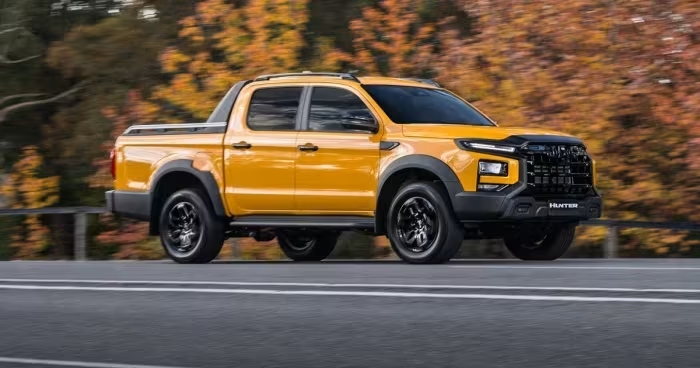
2026 JAC Hunter PHEV
A budget-focused plug-in hybrid dual-cab ute aiming to disrupt the Australian market with aggressive pricing and off-road utility.
How This Score Is Calculated
- Sources analysed: 11 reviews
- Sentiment-only: 11 sources (weighted 1.0×)
- Split: 6 Positive · 3 Mixed · 2 Negative
- Raw weighted average: 6.4
- Formula: Σ(score × weight) ÷ Σ(weight)
- Review period: 2026
- Value sources: 5 of 11 mentioned price or value
- Final score: 6.4/10 (clamped, rounded to 1 decimal)
Algorithmically calculated from source data. No manual adjustments.
- Most reviewed featurePrice/Value (5/11)
- Most praisedOff-road capability
- Most criticisedRide quality
- Reviewer consensus levelModerate
- Value for moneyExcellent Value (8.5/10)
The 2026 JAC Hunter PHEV serves as an aggressive, budget-friendly entry into the electrified ute market, winning praise for its hardware-heavy approach to off-roading and sub-$50k pricing. However, reviewers consistently flag pre-production concerns, specifically regarding unsettled ride quality, laggy powertrain response, and a cabin that lacks the refinement of more established segment rivals. It is a compelling value proposition for those prioritizing utility over polish, though long-term reliability remains an unproven variable.
🔧 Key Specifications
Specifications sourced from reviewer mentions. Verify with manufacturer for complete details.
- Drivetrain: 360kW Plug-in Hybrid
- Towing Capacity: 3500kg (braked)
- Payload: 915kg
- Electric Range: ~100km (estimated)
- Off-road: Locking differentials
- Safety: Five-star ANCAP rating
- Interior: Digital driver display, touchscreen infotainment, steering reach adjustment
💲 Price Range
Under $50,000 (AUD)
Prices sourced from reviews. Check current retailer pricing.
📊 What Reviewers Say — Feature by Feature
7 features evaluated across 11 sources.
👍 Key Strengths
- Aggressive sub-$50k pricing
- Genuine off-road hardware
- Strong 3500kg towing capacity
- 100km electric-only range
👎 Key Weaknesses
- Unsettled, jiggly ride quality
- Laggy powertrain performance
- Cramped rear-seat ergonomics
- Cheap cabin materials
💰 Value for Money Analysis
Reviewers consistently label the JAC Hunter PHEV as the most affordable hybrid ute in the Australian market. While it lacks refinement, the sub-$50,000 price point makes it an exceptionally accessible entry into the PHEV segment.
5 of 11 sources commented on price or value.
⚡ Where Reviewers Disagreed
The following areas saw meaningful disagreement across sources.
- Powertrain Performance: 2 sources praised the 360kW output/efficiency, while 4 sources heavily criticised the laggy real-world response. The disagreement stems from focusing on on-paper specs versus actual driving feel.
🎯 Who This Product Is For
Reviewer recommendations for different target audiences and use cases.
🛠️ Best Use Cases
- Workhorse UtilityStrong towing (3500kg) and payload (915kg) specs make it a legitimate tool for construction or hauling.Great
- Off-road TouringLocking differentials and decent chassis tuning allow it to handle trail work well, though comfort is limited.Good
- Urban CommutingThe 100km electric-only range is useful, though low-speed throttle inconsistency makes city driving less pleasant.OK
🔀 Alternatives Mentioned by Reviewers
- BYD Shark 6 — The primary competitor for the JAC Hunter PHEV. Reviewers frequently compare the two, noting the BYD Shark 6 as a significant market rival that puts pressure on the JAC's value proposition. Choose the Shark 6 if you want a more established market contender.
Alternatives sourced exclusively from reviewer mentions.
🛒 Buyer's Guide
✅ Buy This If…
- You need a budget-friendly hybrid ute with 3500kg towing capacity.
- You value genuine off-road hardware like locking differentials over cabin luxury.
- Your priority is maximizing the 100km electric-only driving range.
❌ Skip This If…
- You expect a refined, smooth ride on sealed suburban roads.
- You prioritize interior space and premium material quality.
- You are sensitive to laggy software or intrusive driver-assist systems.
⚠️ Things to Check Before Buying
- Most reviews were conducted on pre-production models; check if final production units address the cited ride and software issues.
- Investigate the local support and service network, as long-term reliability for this new entrant is currently unproven.
📈 Sentiment Trends Over Time
Reviews span 2026. The following changes were detected:
- Pre-production Status — Almost all initial reviews highlight that the current vehicle is a pre-production unit, noting that final software and suspension tuning could significantly alter the final ownership experience.
The 2026 JAC Hunter PHEV is a bold, value-driven utility that succeeds as a workhorse but stumbles in refinement. While its off-road capability and towing specs are genuinely impressive for the sub-$50k price, the ride quality and powertrain lag prevent it from being a top-tier recommendation. It is an excellent choice for those who value utility over comfort, but buyers should approach with caution until production models prove they can solve the current cabin and software shortcomings.
Top Alternative: BYD Shark 6 — A direct market rival that is consistently positioned as the main competitor to watch in this segment.
PLG_CONTENT_IMAGEGALLERY_ERROR_NO_IMAGES