Nissan Leaf Review
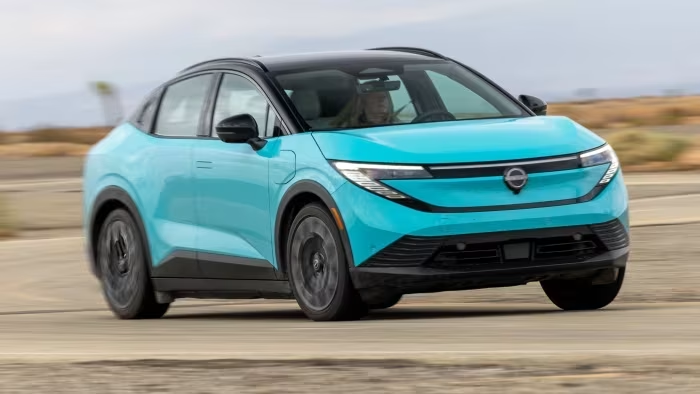
2026 Nissan Leaf
A modernized, crossover-style electric vehicle from Nissan, focused on refined daily commuting, interior comfort, and accessible pricing.
How This Score Is Calculated
- Sources analysed: 33 reviews
- Explicit scores: 12 sources (weighted 1.5×)
- Sentiment-only: 21 sources (weighted 1.0×)
- Split: 25 Positive · 6 Mixed · 2 Negative
- Raw weighted average: 7.8
- Formula: Σ(score × weight) ÷ Σ(weight)
- Review period: 2025–2026
- Value sources: 33 of 33 mentioned price or value
- Final score: 7.8/10 (clamped, rounded to 1 decimal)
Algorithmically calculated from source data. No manual adjustments.
- Most reviewed featureRange (33/33)
- Most praisedInterior Comfort
- Most criticisedRear Legroom
- Reviewer consensus levelHigh
- Value for moneyExcellent Value (8.2/10)
The 2026 Nissan Leaf successfully pivots from a dated hatchback to a contemporary, crossover-inspired EV that prioritizes refined driving dynamics and everyday practicality. It is widely praised for its competitive pricing, high-quality interior, and significant range improvements, though it faces criticism for limited rear legroom and the absence of one-pedal driving in this iteration. It remains the quintessential choice for buyers seeking a reliable, no-nonsense electric commuter.
🔧 Key Specifications
- Display: Dual 14.3-inch interface
- Battery: Liquid-cooled system
- Range: Up to 303 miles (EPA est.)
- Charging: NACS and J1772 standard; 150kW DC fast-charging cap
- Seats: Zero Gravity seating
- OS: Google-based Android Automotive
- Build: Crossover-style body
💲 Price Range
₹25,00,000 – ₹39,00,000
Prices sourced from reviews. Check current retailer pricing.
📊 What Reviewers Say — Feature by Feature
7 features evaluated across 33 sources.
👍 Key Strengths
- Impressive 303-mile electric range
- High-quality, comfortable cabin interior
- Standard NACS charging port compatibility
- Smooth, refined daily driving experience
- Competitive entry-level pricing
👎 Key Weaknesses
- Tight rear passenger legroom
- Lack of one-pedal driving mode
- No all-wheel-drive option available
- Slower DC fast-charging than competitors
- No front storage (frunk)
💰 Value for Money Analysis
The 2026 Nissan Leaf is frequently cited as one of the best-value EVs on the market. Reviewers emphasize that its starting price remains highly accessible while offering features and range that rival more expensive crossovers.
33 of 33 sources commented on price or value.
⚡ Where Reviewers Disagreed
The following areas saw meaningful disagreement across sources.
- Exterior Styling: 18 sources praised the new crossover aesthetic, while 10 sources felt the design remained somewhat bulbous or uninspired. The split reflects a divide between those valuing the modern crossover evolution and those who find the shape dated.
🎯 Who This Product Is For
Reviewer recommendations for different target audiences and use cases.
🛠️ Best Use Cases
- Daily CommutingExcellent comfort and quiet cabin make it ideal for long-distance highway or city commuting.Great
- Family TransportGood for small families, though tight rear legroom may be an issue for older children or tall adults.Good
- Road TrippingImproved range and NACS access make it viable, though charging speed is slower than modern rivals.OK
🔀 Alternatives Mentioned by Reviewers
Maximise this list. Include EVERY single competitor, rival, or alternative product mentioned in any of the source reviews.
- Kia EV3 — A primary competitor often cited for better ride and handling balance, though the Leaf is often considered better value. Choose the EV3 if driving dynamics are more important to you than price.
- Skoda Elroq — Noted for offering more boot space than the Leaf. A strong choice if cargo utility is your absolute priority.
- Hyundai Kona Electric — A frequent rival that offers similar features but is often priced slightly higher. The Leaf is generally seen as the more affordable alternative.
- Kia Niro EV — A strong competitor in the same segment. The Leaf is usually preferred for its lower starting price and better range in base trims.
- Chevrolet Equinox EV — Offers more versatility and AWD options, which the Leaf lacks. Choose this if all-wheel drive is a must-have.
- Tesla Model Y — Often compared for its charging network and crossover form factor; however, the Leaf is positioned as a significantly more affordable entry-level alternative.
- Volkswagen ID.3 — A European rival offering a different design philosophy. The Leaf is often considered to have a more intuitive user interface.
- Toyota C-HR EV — Offers superior athletic performance and AWD, whereas the Leaf focuses on comfort and value.
Alternatives sourced exclusively from reviewer mentions.
🛒 Buyer's Guide
✅ Buy This If…
- You prioritize value, comfort, and reliability for daily commuting.
- You want access to the Tesla Supercharger network via NACS.
- You prefer traditional, intuitive physical controls over complex touch-interfaces.
❌ Skip This If…
- You require all-wheel drive for inclement weather.
- You are an enthusiast looking for sporty, engaging driving dynamics.
- You frequently transport tall adults in the rear seats.
⚠️ Things to Check Before Buying
- Confirm if your preferred trim level maintains the maximum range, as some upgrades reduce mileage.
- Test the rear seat legroom with your typical passengers to ensure it meets your needs.
- Check if your local charging infrastructure supports the 150kW DC limit.
📈 Sentiment Trends Over Time
Reviews span 2025–2026. The following changes were detected:
- Range and Charging — Massive shift from the outdated CHAdeMO to NACS and a jump to 300+ mile range has corrected the primary criticisms of the previous generation.
The 2026 Nissan Leaf is a mature, well-rounded electric crossover that excels as a practical, value-focused daily driver. While it lacks the sportiness and rear-seat spaciousness of some rivals, its refined ride, impressive range, and intuitive design make it a standout for mainstream buyers. It is a highly recommended choice for those who want a reliable, no-nonsense EV that doesn't break the bank.
Top Alternative: Kia EV3 — Choose this instead if you prioritize balanced handling and ride dynamics over the Leaf's superior value proposition.