Seestar Telescope Review
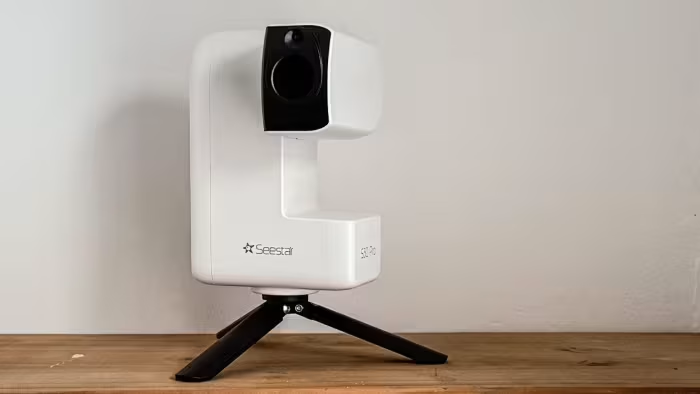
ZWO Seestar Smart Telescopes (S30 Pro / S50)
Portable, automated smart telescopes designed to simplify astrophotography for beginners and hobbyists via smartphone control.
How This Score Is Calculated
- Sources analysed: 7 reviews
- Explicit scores: 0 sources
- Sentiment-only: 7 sources (weighted 1.0×)
- Split: 5 Positive · 2 Mixed · 0 Negative
- Raw weighted average: 7.6
- Formula: Σ(score × weight) ÷ Σ(weight)
- Value sources: 3 of 7 mentioned price or value
- Final score: 7.6/10 (clamped, rounded to 1 decimal)
Algorithmically calculated from source data. No manual adjustments.
- Most reviewed featurePortability (7/7)
- Most praisedEase of Use
- Most criticisedPlanetary Imaging
- Reviewer consensus levelHigh
- Value for moneyExcellent Value (8.5/10)
The ZWO Seestar line represents a revolutionary, highly portable approach to astrophotography, condensing complex rigs into a single, automated, app-controlled unit. Reviewers consistently praise its ability to make deep-sky imaging accessible for beginners even under light-polluted skies. While it excels at nebulas and galaxies, it is significantly less effective for planetary imaging and relies entirely on a smartphone for operation.
🔧 Key Specifications
Specifications sourced from reviewer mentions. Verify with manufacturer for complete details.
- Resolution: 8.3 MP (S30 Pro)
- Sensor: 4K upgrade (S30 Pro)
- Connectivity: Smartphone app control; Wi-Fi
- Features: Built-in light-pollution filter, auto-alignment, live stacking, magnetic solar filter
- Build: Lightweight, compact, fits in camera bag
💲 Price Range
₹64,990 – ₹79,990
- S30 model: ₹64,990
- S50 model: ₹79,990
Prices sourced from reviews. Check current retailer pricing.
📊 What Reviewers Say — Feature by Feature
5 features evaluated across 7 sources.
👍 Key Strengths
- Extremely easy automated setup
- Highly portable, compact design
- Effective deep-sky imaging
- Great value for money
- Built-in filters for light pollution
👎 Key Weaknesses
- Poor performance for planetary imaging
- Total reliance on smartphone app
- Short battery life
- Frequent data downloads required
💰 Value for Money Analysis
Reviewers consistently label the Seestar as the most affordable and accessible entry point into smart astrophotography. It is widely considered to offer exceptional value compared to premium alternatives from brands like Unistellar or Vaonis.
3 of 7 sources commented on price or value.
⚡ Where Reviewers Disagreed
The following areas saw meaningful disagreement across sources.
- Advanced Features: 3 sources praised advanced features like EQ mode, while 2 sources felt these were unnecessary or added complexity for the target beginner audience.
🎯 Who This Product Is For
Reviewer recommendations for different target audiences and use cases.
🛠️ Best Use Cases
- Deep-Sky ExplorationHighly effective for capturing nebulas and galaxies with minimal user intervention.Great
- Travel AstrophotographyLightweight and compact design makes it ideal for transport and field use.Great
- Daytime ObservationSome models support dual-lens setups for daytime use, though limited in scope.Good
🔀 Alternatives Mentioned by Reviewers
- Dwarflab Dwarf 3 — A direct competitor often compared for its price point and value; the Seestar is noted as being highly competitive against this unit.
- Celestron NexStar 8SE — A traditional observational telescope used as a baseline for comparison; reviewers note it is designed for visual observation rather than the automated imaging focus of the Seestar.
- Unistellar eVscope 2 / Unistellar range — High-end alternatives that offer superior build quality and premium optics, though at a much higher price point than the Seestar.
- Vaonis Vespera — Another premium smart telescope alternative that provides higher-end features and optics, but is significantly more expensive than the entry-level Seestar.
Alternatives sourced exclusively from reviewer mentions.
🛒 Buyer's Guide
✅ Buy This If…
- You are a beginner wanting to start astrophotography without complex equipment.
- You live in an urban area and need light-pollution filtering.
- You prioritize portability and ease of use over deep planetary detail.
❌ Skip This If…
- Your primary interest is detailed planetary or lunar imaging.
- You prefer using an eyepiece for traditional visual observation.
- You are uncomfortable with smartphone-only control.
⚠️ Things to Check Before Buying
- Check if your preferred model includes a solar filter, as some versions require separate purchases.
- Be prepared for frequent app updates and data management on your phone.
- Ensure you have a stable tripod if one is not included in your specific kit.
📈 Sentiment Trends Over Time
Reviews span various release waves. The following changes were detected:
- Imaging Capabilities — Newer models like the S30 Pro have introduced 4K sensors and improved optics, addressing some resolution concerns from the original S50.
The ZWO Seestar series is an outstanding entry-level tool that successfully brings astrophotography to the masses. Its automated, ultra-portable design makes it a joy for beginners to capture deep-sky objects, even from light-polluted urban environments. While it struggles with planetary detail and relies heavily on a smartphone app, its exceptional price-to-performance ratio makes it the best value in the current smart telescope market. If you want to photograph the cosmos without the steep learning curve of a traditional rig, this is the definitive choice.
PLG_CONTENT_IMAGEGALLERY_ERROR_NO_IMAGES