Suzuki Evitara Review
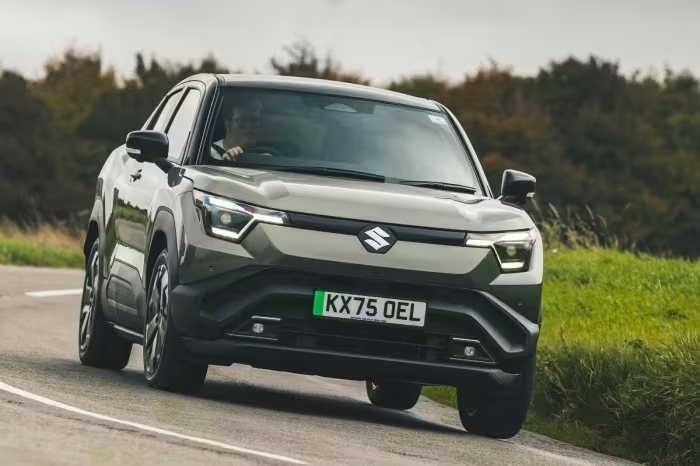
Suzuki eVitara
A rugged, purpose-built electric SUV from Suzuki focusing on traditional ergonomics, off-road capability, and practical interior versatility.
How This Score Is Calculated
- Sources analysed: 7 reviews
- Sentiment-only: 7 sources (weighted 1.0×)
- Split: 3 Positive · 2 Mixed · 2 Negative
- Raw weighted average: 6.1
- Formula: Σ(score × weight) ÷ Σ(weight)
- Review period: 2026 model year
- Value sources: 4 of 7 mentioned price or value
- Final score: 6.1/10 (clamped, rounded to 1 decimal)
Algorithmically calculated from source data. No manual adjustments.
- Most reviewed featureInterior/Cabin (7/7)
- Most praisedRide Quality
- Most criticisedInfotainment & Tech
- Reviewer consensus levelModerate
- Value for moneyFair Value (5.5/10)
The Suzuki eVitara is a rugged, practical electric SUV that succeeds in providing a comfortable, traditional driving experience with genuine off-road capability. However, it struggles to keep pace with modern EV standards, hampered by slow charging speeds, dated infotainment, and a cabin defined by hard plastics and cramped dimensions. It is best suited for buyers who prioritize familiar ergonomics and mechanical reliability over cutting-edge technology or class-leading range.
🔧 Key Specifications
Specifications sourced from reviewer mentions. Verify with manufacturer for complete details.
- Display: Panoramic screen setup
- Battery: Not specified
- Charging: Slow DC fast-charging performance
- Safety: 5-star Bharat NCAP rating; 7 airbags including knee airbag
- Features: ADAS; 40/20/40 split-folding rear seats; Sliding rear seats; Full-size alloy spare wheel
- Dimensions: Compact crossover
- Build Materials: Visible hard plastics
💲 Price Range
Approximately ₹32,00,000 to ₹41,00,000
Prices sourced from reviews. Check current retailer pricing.
📊 What Reviewers Say — Feature by Feature
7 features evaluated across 7 sources.
👍 Key Strengths
- Comfortable and smooth ride quality
- Rugged and distinctive exterior styling
- Capable off-road performance
- Intuitive, traditional cabin ergonomics
- High safety rating with ADAS
👎 Key Weaknesses
- Laggy and dated infotainment system
- Limited boot and cargo capacity
- Heavy use of cheap interior plastics
- Slow DC fast-charging performance
- Cramped rear cabin space
💰 Value for Money Analysis
Reviewers suggest the eVitara's success hinges on aggressive pricing, noting it currently feels overpriced compared to feature-rich Chinese rivals. Many experts recommend waiting for sale prices or ownership details before committing.
4 of 7 sources commented on price or value.
⚡ Where Reviewers Disagreed
The following areas saw meaningful disagreement across sources.
- Driving Dynamics: 3 sources praised the agile handling and light steering, while 2 sources criticized it for not being agile and having poor on-road polish. The disagreement likely stems from different expectations of 'urban agility' vs 'highway refinement'.
🎯 Who This Product Is For
Reviewer recommendations for different target audiences and use cases.
🛠️ Best Use Cases
- Urban CommutingLight steering and intuitive controls make it easy to drive in city environments.Good
- Light Off-RoadingSturdy build and off-road tuning allow for light trail exploration beyond paved roads.Great
- Motorway TravelPoor motorway efficiency and noticeable road/tyre noise make it less ideal for long-distance cruising.Poor
🔀 Alternatives Mentioned by Reviewers
- MG S5 / MG Windsor — Frequently cited as more affordable and feature-rich alternatives that offer better overall value than the Suzuki.
- BYD Atto 3 / Atto 2 — These are the primary benchmarks for the eVitara, often noted as having more advanced tech and better value propositions.
- Chery E5 — Mentioned as a direct, lower-cost competitor that may provide more features for the price.
- Hyundai Creta Electric — A key Indian market rival that is noted for being larger and more practical.
- Tata Curvv EV — Compared as a more feature-rich and spacious option for those seeking a 'large car' feel.
- Kia EV3 — A significant global competitor that is described as having better range, faster charging, and more refinement.
- Ford Puma Gen-E — Noted for superior charging speeds and range efficiency compared to the eVitara.
- Skoda Elroq — An established rival that generally outperforms the eVitara in desirability and interior polish.
- Jeep Avenger — Cited as a direct rival in the compact segment, often praised for higher levels of refinement.
Alternatives sourced exclusively from reviewer mentions.
🛒 Buyer's Guide
✅ Buy This If…
- You prioritize a comfortable, smooth ride quality above all else.
- You prefer traditional cabin layouts with physical buttons over touch-heavy interfaces.
- You require genuine off-road capability in a compact electric package.
❌ Skip This If…
- You are a tech-focused buyer who expects seamless, modern infotainment.
- You frequently travel on motorways where efficiency and noise suppression are critical.
- You need a vehicle with class-leading cargo space for family trips.
⚠️ Things to Check Before Buying
- Confirm local pricing and ownership/warranty packages, as these remain major variables.
- Verify if the rear cabin space is sufficient for your passengers, as it is notably cramped.
- Check the DC fast-charging specs to ensure they meet your specific travel needs.
The Suzuki eVitara is a well-built, rugged SUV that brings traditional ergonomics to the electric segment, yet it is held back by dated tech and poor interior packaging. While its ride quality and off-road capability are commendable, it struggles to justify its price against more refined, tech-forward rivals. We recommend this for traditionalists or those needing light off-road ability, but tech-savvy buyers should look elsewhere. For a more polished experience, consider the Kia EV3 or BYD Atto 3.
PLG_CONTENT_IMAGEGALLERY_ERROR_NO_IMAGES