Xiaomi 17 Pro Max Review
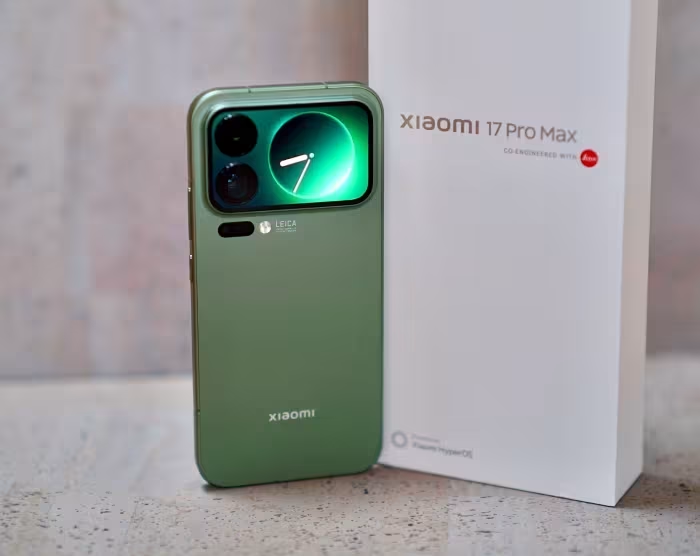
Xiaomi 17 Pro Max
A bold, high-performance flagship featuring a unique rear OLED display, cutting-edge chipset, and massive battery capacity.
How This Score Is Calculated
- Sources analysed: 5 reviews
- Explicit scores: 0 sources
- Sentiment-only: 5 sources (weighted 1.0×)
- Split: 3 Positive · 1 Mixed · 1 Negative
- Raw weighted average: 6.8
- Formula: Σ(score × weight) ÷ Σ(weight)
- Review period: Recent launch
- Final score: 6.8/10 (rounded to 1 decimal)
Algorithmically calculated from source data. No manual adjustments.
- Most reviewed featureSecondary display (5/5)
- Most praisedBattery life
- Most criticisedSoftware/Regional limitations
- Reviewer consensus levelModerate
The Xiaomi 17 Pro Max is a hardware powerhouse defined by its Snapdragon 8 Elite Gen 5 chipset, massive 7,500mAh battery, and an innovative secondary rear OLED display. While it excels in raw performance and endurance, the experience is severely hampered for international users by software limitations, thermal throttling, and the lack of official distribution outside of Asia. It is an impressive piece of engineering that currently lacks the polished ecosystem and regional support of its primary rivals.
🔧 Key Specifications
Specifications sourced from reviewer mentions. Verify with manufacturer for complete details.
- Processor: Snapdragon 8 Elite Gen 5
- Storage: UFS 4.1
- Display: 6.9-inch LTPO AMOLED (Dual display setup)
- Battery: 7,500 mAh
- Main Camera: 50MP (Main)
- Selfie Camera: 50MP
- OS: HyperOS 3.0 (Chinese ROM)
- Wi-Fi: Wi-Fi 7
- Connectivity: 5G, NFC, Cross-device AI
- Build Materials: High-end flagship construction
💲 Price Range
Approximately ₹91,500
Prices sourced from reviews. Check current retailer pricing.
📊 What Reviewers Say — Feature by Feature
7 features evaluated across 5 sources.
👍 Key Strengths
- Class-leading 7,500mAh battery life
- Powerful Snapdragon 8 Elite Gen 5 chipset
- Innovative secondary rear OLED display
- High-quality 50MP main and selfie cameras
- Fast Wi-Fi 7 and UFS 4.1 storage
👎 Key Weaknesses
- Severe thermal throttling under heavy load
- Chinese-only software lacks Google services
- Limited app support for secondary screen
- Inconsistent telephoto and ultrawide camera performance
- No official distribution outside Asia
💰 Value for Money Analysis
Reviewers acknowledge that at approximately ₹91,500, the device offers premium high-end hardware at a more accessible price point than traditional Western flagship giants.
3 of 5 sources commented on price or value.
⚡ Where Reviewers Disagreed
The following areas saw meaningful disagreement across sources.
- Camera Quality: 2 sources praised the high-quality, versatile camera system, while 2 sources criticized it for inconsistent post-processing, weak ultrawide/telephoto lenses, and poor color tuning. This suggests a disparity between the hardware capability and the software's ability to process images effectively.
🎯 Who This Product Is For
Reviewer recommendations for different target audiences and use cases.
🛠️ Best Use Cases
- Selfie PhotographyThe rear screen allows users to utilize the high-quality main camera for selfies, providing superior detail and skin tone representation.Great
- High-Performance GamingWhile the Snapdragon 8 Elite Gen 5 is powerful, severe thermal throttling makes it less reliable for extended, high-intensity gaming sessions.OK
- Mobile ProductivityThe massive battery and fast storage support heavy workloads, though software limitations may hinder global workflows.Good
🔀 Alternatives Mentioned by Reviewers
- Apple iPhone 17 Pro Max — A primary competitor in the global flagship space; reviewers note the Xiaomi offers comparable hardware at a lower price but lacks the ecosystem polish and official localization of Apple's flagship.
- Samsung Galaxy S25 Ultra — Often cited as the gold standard for global flagships; it is considered more reliable and polished than the 17 Pro Max, particularly in software consistency and camera refinement.
- Vivo X300 Pro — A direct competitor in the high-end space; it is recognized as a superior alternative for those seeking a more refined flagship experience that better challenges the market leaders.
- Xiaomi 15 Ultra — The predecessor remains superior to the 17 Pro Max in telephoto lens sharpness, dynamic range, and overall contrast, despite the newer model's chipset upgrade.
- RedMagic 11 Pro — A performance-focused alternative that competes directly with the 17 Pro Max's flagship power, serving as a benchmark for raw performance in the segment.
Alternatives sourced exclusively from reviewer mentions.
🛒 Buyer's Guide
✅ Buy This If…
- You are a tech enthusiast looking for experimental hardware like a functional secondary rear display.
- You require extreme battery endurance for long days away from a charger.
- You are comfortable using Chinese ROMs and sideloading necessary services.
❌ Skip This If…
- You rely on Google Services, Android Auto, or official regional software support.
- You need a consistent, reliable camera system for zoom and telephoto photography.
- You are a casual user who wants a "plug-and-play" flagship experience.
⚠️ Things to Check Before Buying
- Verify that your local carrier bands are supported by the Chinese-market hardware.
- Check for the availability of a global ROM or software workarounds for your region.
- Be aware that official updates and long-term software support policies are currently unclear.
📈 Sentiment Trends Over Time
Reviews span recent launch period. The following changes were detected:
- Camera Perception — Critics remain divided, with initial high expectations for Leica-branded hardware tempered by real-world inconsistency in post-processing.
The Xiaomi 17 Pro Max is an audacious piece of hardware that pushes boundaries with its secondary screen and massive battery, but it is ultimately a niche product for tech-savvy users rather than a mass-market flagship. Its raw power is undeniable, yet the severe thermal throttling and lack of international software polish prevent it from toppling industry titans like Samsung or Apple. If you value innovation over ecosystem stability and are willing to navigate software hurdles, it is an intriguing buy. Otherwise, consider more refined alternatives like the Samsung Galaxy S25 Ultra for a consistent, hassle-free experience.
Top Alternative: Samsung Galaxy S25 Ultra — A more polished, globally supported flagship that offers a more reliable, consistent user experience.
PLG_CONTENT_IMAGEGALLERY_ERROR_NO_IMAGES