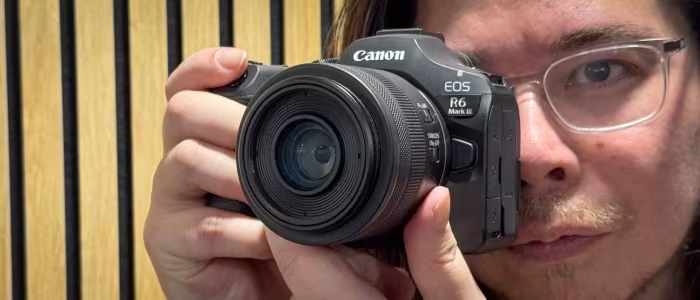
Canon EOS R6 Mark II Review
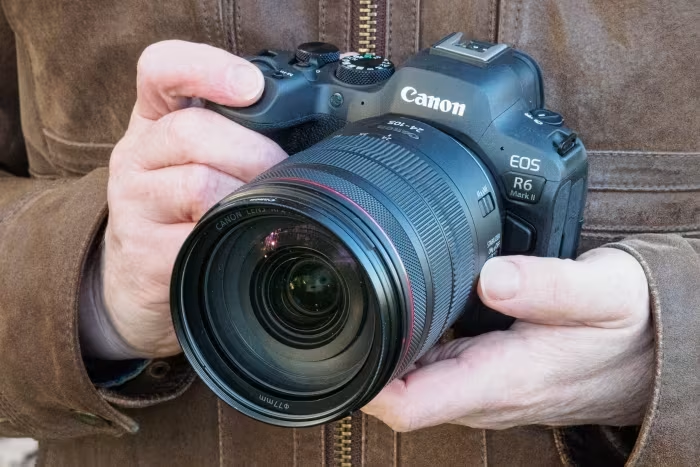
Canon EOS R6 Mark II & Mark III
A versatile, high-performance hybrid full-frame mirrorless camera series designed for professional enthusiasts and hybrid content creators.
How This Score Is Calculated
- Sources analysed: 12 reviews
- Raw weighted average: 8.8
- Formula: Σ(score × weight) ÷ Σ(weight)
- Consensus bonus +0.3: 85% agreement
- Most reviewed featureAutofocus (12/12)
- Most praisedBurst shooting & AF
- Most criticisedLack of 3rd party lenses
- Reviewer consensus levelHigh
The Canon EOS R6 series is widely regarded as the gold standard for hybrid shooters who demand high-speed performance and professional video capabilities. The R6 Mark II established a strong foundation with its class-leading autofocus and burst speeds, while the Mark III pushes the envelope with a 32.5MP sensor and 7K internal Raw recording. While professional users may lament the limited third-party lens ecosystem and lack of active cooling, these cameras offer an unbeatable balance of power and ergonomics for most creative workflows.
🔧 Key Specifications
- Sensor: 24.2MP (Mk II) / 32.5MP (Mk III)
- Burst Shooting: 40fps (electronic shutter)
- Video: Up to 7K 60p Raw (Mk III) / 4K 60p 10-bit (Mk II)
- Stabilisation: Up to 8.5 stops
- Autofocus: Advanced AI-based subject tracking
- Build: Weather-sealed magnesium alloy
- Storage: Dual slots (CFexpress Type B support in Mk III)
💲 Price Range
₹1,67,000 – ₹2,36,000
📊 What Reviewers Say — Feature by Feature
👍 Key Strengths
- Class-leading autofocus performance
- Impressive 40fps burst shooting
- Advanced video features (7K Raw)
- 8.5-stop image stabilisation
👎 Key Weaknesses
- Limited third-party RF lens support
- No active cooling system
- Fragile micro HDMI/port concerns
💰 Value for Money Analysis
Reviewers classify the series as a high-performance, professional-enthusiast option. While the Mark III is priced at a premium, the Mark II is frequently cited as a 'value-oriented' choice for those who don't need the latest 7K video specs.
⚡ Where Reviewers Disagreed
- Thermal Management: Some sources warn of thermal restrictions during heavy video use, while others describe it as a highly capable hybrid that handles professional tasks well.
🎯 Who This Product Is For
🛠️ Best Use Cases
- Event Photography Excellent reliability and autofocus make it a dependable workhorse for weddings and events. Great
- Cinematic Video The Mark III's 7K Raw and open gate capture provide immense flexibility for professional video production. Great
🔀 Alternatives Mentioned by Reviewers
- Sony Alpha A7 IV — Frequently compared as the main rival; reviewers note Sony's superior third-party lens selection as a key advantage over Canon.
- Panasonic Lumix S5 II — Cited as a strong, competitively priced hybrid alternative that excels in video-centric workflows.
- Nikon Z6 III — Positioned as a direct competitor in the professional enthusiast mirrorless market with high-performance specs.
- Canon EOS R3 — The 'big brother' flagship, mentioned by reviewers as the benchmark for performance that the R6 series mimics in a more portable body.
- Canon EOS C50 — Compared specifically for video-first workflows; noted as having better dual base ISO capabilities but less versatility for stills.
🛒 Buyer's Guide
✅ Buy This If…
- You are a hybrid shooter needing pro-level autofocus.
- You shoot sports or wildlife and require 40fps bursts.
- You want a familiar, ergonomic Canon interface.
❌ Skip This If…
- You rely heavily on third-party lens options.
- You need active cooling for extreme, long-form video shoots.
📈 Sentiment Trends Over Time
- Video Capability — Transitioned from standard 4K in the Mark II to professional 7K Raw in the Mark III.
The Canon EOS R6 series stands out as an exceptional, high-performance hybrid system. Whether you choose the R6 Mark II for its balanced value or the R6 Mark III for its cutting-edge video and resolution, you are getting one of the most capable autofocus systems on the market. While the lack of third-party lenses remains a point of frustration, the sheer speed and reliability of these bodies make them a top-tier choice for professionals and enthusiasts alike.