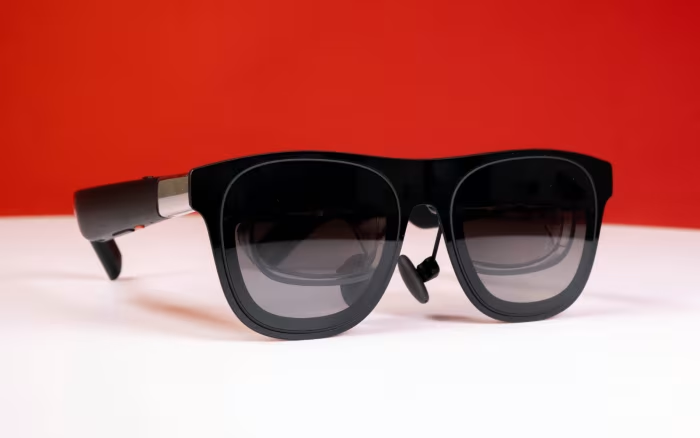
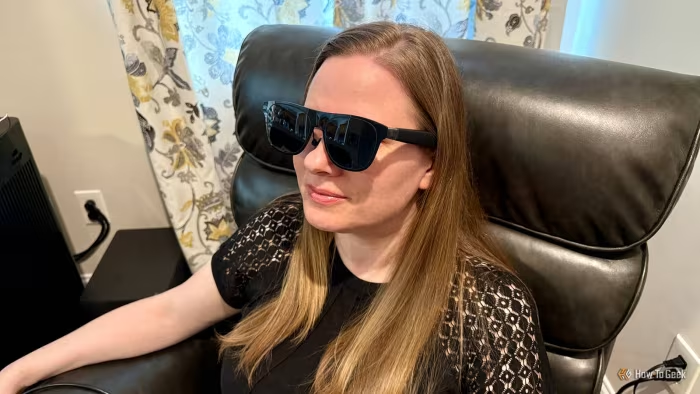
xreal one ar glasses Review
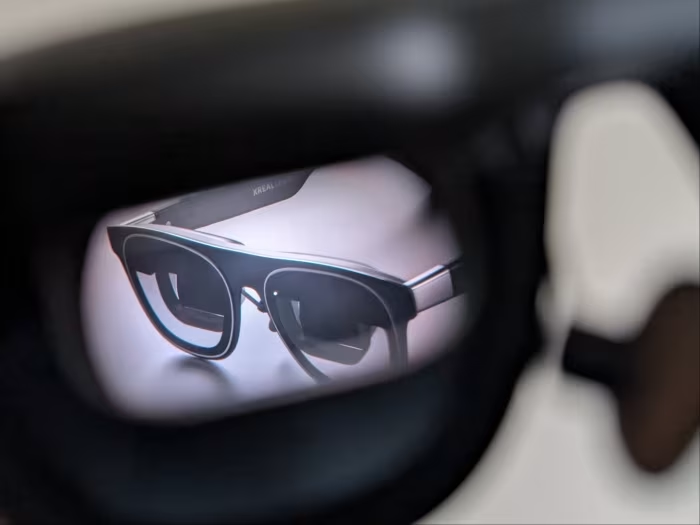
XREAL One / One Pro AR Glasses
High-end tethered AR glasses featuring Micro-OLED displays, designed for immersive personal media consumption and portable productivity.
How This Score Is Calculated
- Sources analysed: 15 reviews
- Explicit scores: 8 sources (weighted 1.5×)
- Sentiment-only: 7 sources (weighted 1.0×)
- Raw weighted average: 8.2
- Formula: Σ(score × weight) ÷ Σ(weight)
- Review period: Recent releases
- Value sources: 12 of 15 mentioned price or value
- Final score: 8.2/10 (clamped, rounded to 1 decimal)
Algorithmically calculated from source data. No manual adjustments.
- Most reviewed featureDisplay Quality (15/15)
- Most praisedMicro-OLED Visuals
- Most criticisedHigh Price Point
- Reviewer consensus levelHigh
- Value for moneyGood Value (7.2/10)
The XREAL One and One Pro series are widely regarded as the gold standard for portable, tethered AR glasses, offering a crisp, massive virtual screen experience that is perfect for travel and media. While they excel in display fidelity, audio quality, and design, they are hindered by a premium price tag and a limited field of view compared to dedicated VR headsets. They are best suited for power users and frequent travelers who prioritize a compact, plug-and-play external monitor replacement.
🔧 Key Specifications
Specifications sourced from reviewer mentions. Verify with manufacturer for complete details.
- Display: Dual Micro-OLED, 1080p resolution
- Refresh Rate: 120Hz
- Field of View: 50 degrees
- Processor: X1 Chip (for 3DoF tracking)
- Connectivity: USB-C (Tethered)
- Audio: Bose-tuned open-air stereo speakers
- Tracking: 3DoF (Degrees of Freedom)
- Features: Electrochromic dimming, spatial tracking
- Weight: Lightweight design
💲 Price Range
₹37,500 to ₹65,000
Prices sourced from reviews. Check current retailer pricing.
📊 What Reviewers Say — Feature by Feature
9 features evaluated across 15 sources.
👍 Key Strengths
- Stunning high-definition Micro-OLED displays
- Excellent Bose-tuned spatial audio
- Lightweight and comfortable for travel
- Effective electrochromic dimming modes
- Responsive 3DoF tracking with X1 chip
👎 Key Weaknesses
- Prohibitively expensive for many users
- Limited 50-degree field of view
- Requires tethered connection to devices
- Potential for device overheating during use
- No built-in diopter/IPD adjustment (Pro models)
💰 Value for Money Analysis
Reviewers generally agree that while the price is high, the build quality and unique functionality justify the cost for the target demographic. It is viewed as a premium device rather than a budget-friendly mass-market accessory.
12 of 15 sources commented on price or value.
⚡ Where Reviewers Disagreed
The following areas saw meaningful disagreement across sources.
- IPD/Focusing: Some reviewers praise the IPD adjustment system (XREAL One), while others (One Pro) report significant discomfort for users with narrow IPDs (under 57mm).
- Style: Opinions vary on the design; some find it sleek and 'Wayfarer-esque', while others describe it as looking 'unusual' or 'odd' for public wear.
🎯 Who This Product Is For
Reviewer recommendations for different target audiences and use cases.
🛠️ Best Use Cases
- Media ConsumptionExcellent for watching movies and shows, creating an immersive, high-quality theater-like experience.Great
- GamingThe 120Hz refresh rate and low latency make it a strong option for portable gaming.Great
- ProductivityProvides a large, secondary screen for work, though text clarity can be an issue for some users.Good
🔀 Alternatives Mentioned by Reviewers
Comparison of competing AR and VR hardware.
- Meta Quest 3 / 3S — A dedicated VR headset with a significantly wider 97-degree field of view; reviewers suggest choosing this over XREAL if you prioritize true mixed reality immersion over portability.
- Viture Luma Ultra — A direct competitor in the AR glasses space; noted by reviewers as having a different build aesthetic, though XREAL is often praised for superior display specs.
- Rokid Max 2 — Mentioned as a key competitor in the portable AR category, offering similar functionality but often compared unfavorably in terms of unique software features.
- ASUS AirVision M1 — An alternative portable display solution that reviewers found less practical and functional than the XREAL One Pro.
- RayNeo Air 3s Pro — Another competitor in the AR glasses market, consistently positioned as a lower-tier or alternative choice compared to the premium XREAL offering.
Alternatives sourced exclusively from reviewer mentions.
🛒 Buyer's Guide
✅ Buy This If…
- You are a frequent traveler who wants a portable, high-quality cinema experience.
- You need a massive, private, and portable monitor for productivity on the go.
- You value high-fidelity Micro-OLED visuals and lightweight design.
❌ Skip This If…
- You have a narrow IPD, as you may face significant focusing issues with some models.
- You expect full-scale VR immersion, as the field of view is limited.
- You are on a tight budget, as these are a significant investment.
⚠️ Things to Check Before Buying
- Check your device compatibility, as some older consoles or phones may require extra adapters.
- Consider whether you need diopter adjustments, as some Pro models lack hardware focus dials.
- Be aware of potential audio leakage if you plan to use these in quiet public spaces.
📈 Sentiment Trends Over Time
Reviews indicate a shift from the original Air series to the One and One Pro models.
- Tracking Performance — The introduction of the X1 chip has significantly improved 3DoF tracking stability compared to previous generations.
The XREAL One and One Pro are the premier choice for anyone needing a high-quality, portable virtual display. They offer best-in-class Micro-OLED visuals and a comfortable design that transforms travel and work. While the high price and limited field of view are notable drawbacks, no other device currently balances portability and display quality quite as effectively. If you are a power user seeking a private theater experience, this is the gold standard.
Top Alternative: Meta Quest 3 — Choose this if you prioritize wide field-of-view and true mixed-reality features over a minimalist, tethered glasses form factor.