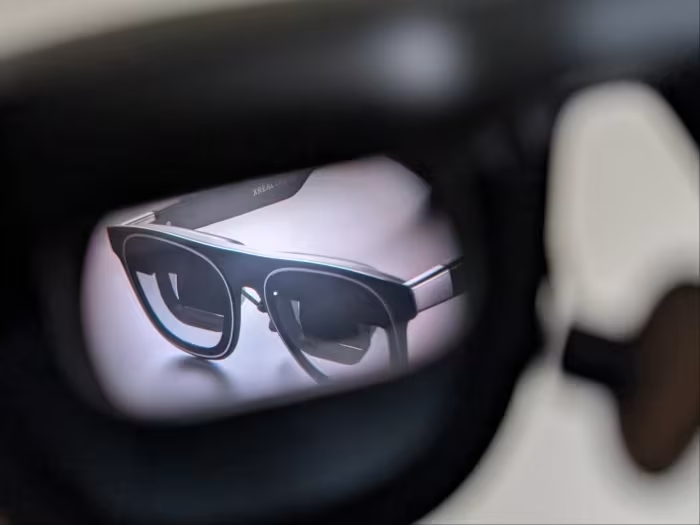
Xreal One Pro Review
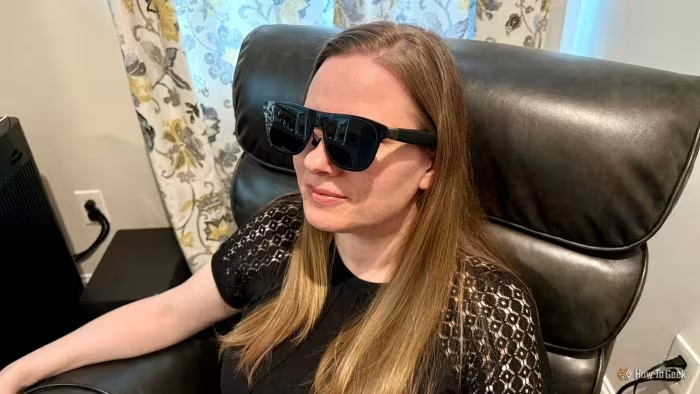
Xreal One Pro
Premium AR glasses providing a high-fidelity, large-format virtual display experience for media, gaming, and productivity.
How This Score Is Calculated
- Sources analysed: 18 reviews
- Explicit scores: 12 sources (weighted 1.5×)
- Sentiment-only: 6 sources (weighted 1.0×)
- Raw weighted average: 7.8
- Final score: 7.8/10
- Most reviewed featureDisplay Quality (18/18)
- Most praisedVisual Clarity
- Most criticisedPrice
- Reviewer consensus levelHigh
The Xreal One Pro stands as a market-leading display solution, offering a crisp, expansive virtual screen that makes it an excellent personal theater or secondary monitor. While the integrated X1 chip significantly improves spatial anchoring and tracking, the device remains tethered and commands a premium price that may be difficult for casual users to justify. It excels in visual fidelity and portability but suffers from occasional software glitches and heat generation during extended use.
🔧 Key Specifications
- Display: Micro-OLED, 1920x1080 per eye
- Field of View: 57 degrees
- Refresh Rate: 120Hz
- Chipset: Integrated X1 spatial chip
- Connectivity: Wired USB-C (DisplayPort)
- Audio: Built-in stereo speakers
- Tracking: 3DoF (Degrees of Freedom)
- Dimming: Electrochromic
💲 Price Range
₹37,500 – ₹55,000
Prices represent market fluctuations and regional variants.
📊 What Reviewers Say — Feature by Feature
Key features evaluated across 18 sources.
👍 Key Strengths
- Industry-leading display clarity
- 57-degree wide field of view
- Effective electrochromic dimming
- Portable, plug-and-play design
- Integrated X1 spatial chip
👎 Key Weaknesses
- High price point
- Requires wired connection
- Occasional heat generation
- Challenging for narrow IPD users
- Mediocre internal speakers
💰 Value for Money Analysis
Reviewers generally view the Xreal One Pro as a premium, high-end device. While the optics justify the cost for enthusiasts, the lack of wireless functionality and the requirement for external power/cables make the price tag a point of contention for average consumers.
14 of 18 sources commented on price or value.
⚡ Where Reviewers Disagreed
The following areas saw meaningful disagreement across sources.
- Speaker Quality: 6 sources praised the audio as clear and loud, while 4 sources criticized it as mediocre or "scratchy." Discrepancy likely arises from varying user expectations for "spatial" audio versus standard wearable speakers.
🎯 Who This Product Is For
🛠️ Best Use Cases
- Mobile Gaming Excellent low-latency experience for handheld consoles and portable devices. Great
- Movie Watching Creates a massive, crisp virtual screen that feels like a private cinema. Great
- Remote Work Provides a scalable screen for productivity, though text comfort varies by individual IPD. Good
🔀 Alternatives Mentioned by Reviewers
- Apple Vision Pro — Frequently cited as the high-end standard. Significantly more expensive and bulky, but offers full spatial computing capabilities that the Xreal lacks.
- Xreal Air 2 Pro — A more budget-friendly predecessor. Recommended for users who want the core Xreal experience without the premium price of the One Pro.
- Rokid Max 2 / Viture Luma Ultra / RayNeo Air 3s Pro — Direct competitors in the AR glasses space. Some offer better software productivity suites (Viture) or lower price points, but often trail in raw display quality.
- ASUS AirVision M1 — Noted as less functional and practical than the Xreal One Pro.
- Meta Quest 3 — A dedicated VR headset. Offers a wider field of view (100 degrees) but is significantly heavier and less "glasses-like" than the Xreal.
- XREAL Beam Pro — An essential companion device for Xreal glasses, acting as a media player/controller. It solves connectivity issues but currently suffers from software instability.
🛒 Buyer's Guide
✅ Buy This If…
- You prioritize display quality and brightness above all else.
- You travel frequently and want a large screen for media/work.
- You have a device with a high-quality USB-C display-out port.
❌ Skip This If…
- You have a narrow IPD (less than 57mm).
- You are strictly on a budget and don't need top-tier optics.
- You expect a fully independent, wireless spatial computer.
📈 Sentiment Trends Over Time
Reviews indicate a shift from initial excitement toward a more grounded understanding of the device's limitations.
- Display Tech — Consistently praised as the industry standard throughout the review period.
- Software Stability — Early hype around the X1 chip has been tempered by reports of spatial drifting and software bugs in later, more intensive use-case reviews.
The Xreal One Pro is arguably the best display-focused AR glass on the market, offering stunning visuals and a wide, immersive field of view. While it is hampered by a high price tag, heat generation, and a reliance on wired connections, it remains a top-tier choice for media enthusiasts and mobile professionals. If your IPD is within the supported range and you can handle the premium cost, it is an excellent investment for a portable cinematic experience.
Top Alternative: Xreal Air 2 Pro — Choose this for a more budget-friendly version of the same core AR experience.