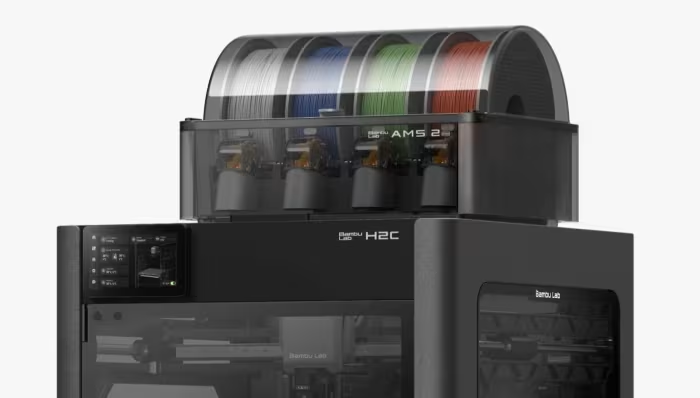
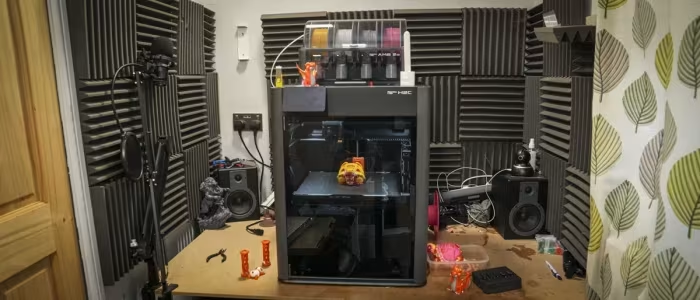
Bambu Lab H2C 3D Printer Review

Bambu Lab H2C
A high-performance, professional-grade 3D printer featuring an innovative multi-nozzle Vortek tool-changing system for reduced waste and multi-material efficiency.
How This Score Is Calculated
- Sources analysed: 6 reviews
- Explicit scores: 0 sources
- Sentiment-only: 6 sources (weighted 1.0×)
- Split: 5 Positive · 1 Mixed · 0 Negative
- Raw weighted average: 8.8
- Consensus bonus +0.3: 83% sources agreed
- Final score: 8.8/10
- Most reviewed featureVortek System (6/6)
- Most praisedWaste Reduction
- Most criticisedHigh Price
- Reviewer consensus levelHigh
- Value for moneyFair Value (6.0/10)
The Bambu Lab H2C is a groundbreaking desktop 3D printer that distinguishes itself through an innovative multi-nozzle Vortek tool-changing system. It excels in minimizing filament purge waste while supporting complex multi-material prints with up to 24-filament capacity. While its premium price and increased mechanical complexity may deter beginners, it remains an indispensable tool for power users and small-scale production environments.
🔧 Key Specifications
Specifications sourced from reviewer mentions. Verify with manufacturer for complete details.
- Nozzle Temp: 350°C
- Chamber Temp: 65°C
- Filament Capacity: Up to 24 (via AMS expansion)
- Tool System: Vortek multi-nozzle tool-changer
- Heating: 8-second induction nozzle heating
- Compatibility: Bambu Studio, MakerWorld integration
- Build Volume: Slightly smaller than H2D (due to nozzle rack)
💲 Price Range
Approx. ₹2,00,000 – ₹3,50,000
- EUR: €2,249
- GBP: £1,999
- AUD: 3699 AUD
Prices sourced from reviews. Check current retailer pricing.
📊 What Reviewers Say — Feature by Feature
7 features evaluated across 6 sources.
👍 Key Strengths
- Innovative Vortek tool-changing system
- Significantly reduced filament waste
- High 350°C nozzle/65°C chamber temp
- Scalable 24-filament capacity
- Excellent user-friendly software ecosystem
👎 Key Weaknesses
- High premium price point
- Increased mechanical complexity
- Larger footprint due to AMS dependency
- Noisy operation during use
- USB drive formatting issues
💰 Value for Money Analysis
While reviewers acknowledge the H2C is expensive, they generally view it as a professional-grade investment rather than a casual purchase. Its value is tied to productivity gains, specifically the reduction in wasted filament and increased speed, which justifies the cost for power users and small businesses.
6 of 6 sources commented on price or value.
⚡ Where Reviewers Disagreed
The following areas saw meaningful disagreement across sources.
- Ease of Use: 3 sources praised its ease of use out of the box, while 2 sources warned that the complexity of the Vortek system and AMS management could feel overwhelming for less experienced users.
🎯 Who This Product Is For
Reviewer recommendations for different target audiences and use cases.
🛠️ Best Use Cases
- Small-Scale ProductionHigh temperature threshold (350°C) and reduced purge waste make it ideal for consistent, professional output.Great
- Multi-Material PrototypingThe Vortek system allows for seamless switching between materials like TPU, reducing the need for constant manual intervention.Great
- Home Hobbyist ProjectsWhile capable, the noise levels and high cost may be prohibitive for standard home setups.OK
🔀 Alternatives Mentioned by Reviewers
- Bambu Lab H2D — The predecessor model. It is cheaper and has a larger build volume but lacks the advanced Vortek tool-changing system and produces significantly more purge waste. Choose this if budget is a primary concern.
- Bambu Lab H2S — Mentioned as having fewer moving parts than the H2C. It is a simpler, more established platform, though it lacks the H2C's advanced multi-nozzle efficiency.
- Prusa XL — A direct competitor in the multi-tool head space. Unlike the H2C's nozzle-swapping system, the Prusa uses full tool heads for each filament. Reviewers note this is a different architectural approach to multi-material printing.
- Snapmaker U1 — Another multi-tool head system alternative. Compared to the H2C, it represents a different design philosophy for managing multiple materials, which reviewers contrast with the H2C's unique hot-end swapping method.
Alternatives sourced exclusively from reviewer mentions.
🛒 Buyer's Guide
✅ Buy This If…
- You need professional-grade, high-volume 3D printing capabilities.
- You frequently print with multiple materials and want to minimize purge waste.
- You require high-temperature support (350°C) for specialized filaments.
❌ Skip This If…
- You are a casual hobbyist with a limited budget.
- You prefer a simple, low-maintenance printer with fewer moving parts.
- You are sensitive to machine noise in your workspace.
⚠️ Things to Check Before Buying
- Ensure you have the physical space required for the AMS units, which significantly increase the total footprint.
- Be prepared to manage the complexity of a multi-nozzle system compared to standard single-nozzle printers.
- Check current local pricing, as it varies significantly by region (India/Europe/Australia).
📈 Sentiment Trends Over Time
Reviews indicate a shift in perception since the H2D launch.
- Efficiency — The move to the Vortek system is seen as a major technical leap over the H2D/H2S series, specifically regarding waste reduction.
Long-term impressions emphasize that while the H2C is more complex, the trade-off in efficiency is viewed as a positive evolution in Bambu Lab's product line.
The Bambu Lab H2C is an outstanding, professional-grade machine that redefines multi-material efficiency through its innovative Vortek system. While its high price and complex mechanical setup make it less ideal for casual users, its performance and low-waste capabilities are unmatched. For power users and small-scale production, this is currently the benchmark to beat. If the cost is too high, the older H2D remains a capable, more affordable alternative.
Top Alternative: Bambu Lab H2D — A more budget-friendly option if you can sacrifice the advanced multi-nozzle tool-changing capabilities of the H2C.