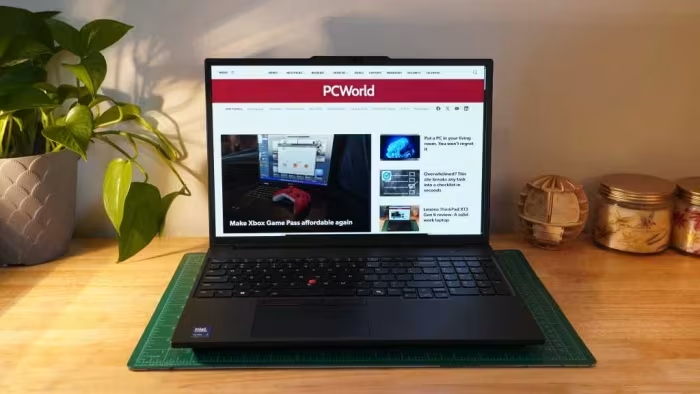
Lenovo ThinkPad P1 Gen 7 Review

Lenovo ThinkPad P1 Gen 7
A premium, thin-and-light mobile workstation designed for professional developers, designers, and creators requiring high-performance portability.
How This Score Is Calculated
- Sources analysed: 5 reviews
- Explicit scores: 0 sources (weighted 1.5×)
- Sentiment-only: 5 sources (weighted 1.0×)
- Split: 4 Positive · 1 Mixed · 0 Negative
- Raw weighted average: 8.2
- Formula: Σ(score × weight) ÷ Σ(weight)
- Consensus bonus +0.3: 80% sources agreed
- Final score: 8.2/10 (clamped, rounded to 1 decimal)
Algorithmically calculated from source data. No manual adjustments.
- Most reviewed featureKeyboard (5/5)
- Most praisedBuild Quality
- Most criticisedPrice
- Reviewer consensus levelHigh
The Lenovo ThinkPad P1 Gen 7 is widely regarded as a premier thin-and-light mobile workstation that excels in build quality and input ergonomics. It offers a powerful, well-optimized computing experience for professionals, though it commands a high premium and compromises slightly on peak GPU performance compared to its predecessor. It is best suited for power users who prioritize portability and typing comfort over raw graphical supremacy.
🔧 Key Specifications
Specifications sourced from reviewer mentions. Verify with manufacturer for complete details.
- Processor: Intel Core Ultra 7 155H
- RAM: Modular memory support
- Storage: Dual M.2 2280 SSD slots
- Display: 16-inch IPS (1,920 x 1,080 or WQXGA options), matte finish
- Battery: Large capacity, fast charging
- Camera: Integrated webcam (noted as grainy)
- Connectivity: Extensive port selection, no 5G option
- Build Materials: Premium matte black chassis
💲 Price Range
Approximately ₹1,68,000 to ₹5,56,000
Prices sourced from reviews. Check current retailer pricing.
📊 What Reviewers Say — Feature by Feature
7 features evaluated across 5 sources.
👍 Key Strengths
- Industry-leading keyboard feel
- Exceptional, robust build quality
- Well-optimized professional performance
- Excellent port selection
- Modular storage and memory
👎 Key Weaknesses
- Very high premium pricing
- Lacks dynamic display refresh rates
- Reduced GPU power vs predecessor
- Webcam quality is only middling
- Matte chassis attracts fingerprints
💰 Value for Money Analysis
Reviewers acknowledge the high build quality and professional performance but consistently highlight the premium price tag. It is viewed as an investment for specific professional workloads rather than a general-purpose value machine.
3 of 5 sources commented on price or value.
⚡ Where Reviewers Disagreed
The following areas saw meaningful disagreement across sources.
- GPU Performance: 2 sources praised the performance/optimization, while 2 sources criticized the reduction in raw graphical power compared to the previous model. The disagreement stems from whether one values system-wide optimization over peak raw GPU throughput.
🎯 Who This Product Is For
Reviewer recommendations for different target audiences and use cases.
🛠️ Best Use Cases
- Multimedia CreationHighly effective for creative workflows provided the specific software leverages the available GPU.Great
- Professional Office/Field WorkIts robust build and extensive port selection make it ideal for demanding professional environments.Great
🔀 Alternatives Mentioned by Reviewers
- Dell XPS 16 — A direct competitor often cited for its design, though the ThinkPad is noted for being lighter and offering a superior port selection.
- MacBook Pro 16 — Often compared for portability and power; the ThinkPad is noted for having a different balance of build and port utility compared to the slightly thinner but heavier Apple machine.
- HP ZBook Studio 16 G10 — An alternative workstation that the ThinkPad P1 Gen 7 is consistently described as being thinner and more portable than.
- HP ZBook Fury 16 G9 — A larger workstation compared to the P1; the ThinkPad is highlighted as the more mobile, compact choice.
- Lenovo ThinkPad P16 Gen 1 — A larger, less portable alternative within the same brand; the P1 Gen 7 is the preferred choice for those prioritizing weight and thinness.
Alternatives sourced exclusively from reviewer mentions.
🛒 Buyer's Guide
✅ Buy This If…
- You are a professional needing a portable, robust workstation.
- You value keyboard comfort above all other input factors.
- You require extensive legacy and modern port connectivity.
❌ Skip This If…
- You are a casual user; it is significant overkill for everyday tasks.
- You require maximum raw GPU power for extreme rendering tasks.
- You are on a budget, as this is a premium-priced device.
⚠️ Things to Check Before Buying
- Verify that your specific software workflows benefit from the provided GPU configuration.
- Confirm if you need cellular/5G connectivity, as this model lacks it.
📈 Sentiment Trends Over Time
Reviews span the launch period of the Gen 7. The following changes were detected:
- GPU Performance — Compared to the Gen 6 predecessor, the P1 Gen 7 has seen criticism for a reduction in raw graphical power and VRAM.
The Lenovo ThinkPad P1 Gen 7 is an outstanding choice for professionals who need a durable, high-performance machine in a portable form factor. While it comes with a premium price and a slight reduction in raw GPU power compared to the previous model, its best-in-class keyboard and robust connectivity options make it a reliable workhorse. If you prioritize build quality and professional utility over peak graphical benchmarking, this is a top-tier investment.
Top Alternative: Dell XPS 16 — Choose this if you prefer a different aesthetic design and are willing to trade some port versatility for it.