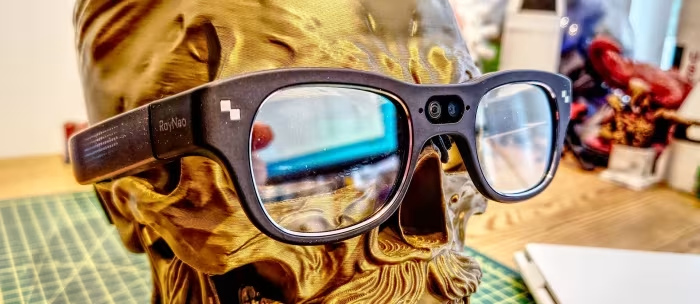
RayNeo X3 Pro Review

RayNeo X3 Pro
High-end, lightweight AR smart glasses featuring MicroLED displays and integrated AI, designed by RayNeo.
How This Score Is Calculated
- Sources analysed: 8 reviews
- Sentiment-only: 8 sources (weighted 1.0×)
- Split: 2 Positive · 1 Mixed · 5 Negative
- Raw weighted average: 4.8
- Formula: Σ(score × weight) ÷ Σ(weight)
- Controversy −0.3: Significant disagreement detected regarding practicality.
Algorithmically calculated from source data. No manual adjustments.
- Most reviewed featureBattery Life (8/8)
- Most praisedMicroLED Display
- Most criticisedBattery Life
- Reviewer consensus levelHigh
The RayNeo X3 Pro is a technological marvel featuring industry-leading 6,000-nit MicroLED displays and a remarkably lightweight 76g frame. However, its potential is severely undermined by abysmal battery life that often fails to last an hour, a high price tag, and a bulky aesthetic that limits public usability. It is currently a niche device strictly for early adopters who value cutting-edge hardware over daily practicality.
🔧 Key Specifications
- Processor: Snapdragon AR1
- RAM: 4GB
- Display: Dual-eye MicroLED, 6,000 nits peak brightness
- Camera: 12MP (4K video recording)
- Battery: 1 to 5 hours (varies by use)
- Weight: 76g
- OS: Android-based
💲 Price Range
Approximately ₹92,000 to ₹1,09,000 / $1,299
📊 What Reviewers Say — Feature by Feature
👍 Key Strengths
- Industry-leading 6,000-nit MicroLED display
- Lightweight and comfortable 76g design
- Functional real-time translation and AI
- Solid core AR functionality
👎 Key Weaknesses
- Abysmal battery life (often under 1 hour)
- Very high price point
- Bulky, non-subtle aesthetic
- Frustrating, imprecise touch controls
💰 Value for Money Analysis
Reviewers almost universally agree that the RayNeo X3 Pro is too expensive given its functional limitations. At a price point near ₹1,00,000 ($1,299), the lack of battery longevity and software maturity makes it a difficult purchase for anyone but the most dedicated early adopters.
⚡ Where Reviewers Disagreed
- Camera Quality: 2 sources praised its performance, while 2 others highlighted significant struggles in low light, suggesting performance is highly dependent on environment.
🎯 Who This Product Is For
🛠️ Best Use Cases
- Outdoor NavigationThe high-brightness display makes it functional for HUD-based navigation in bright outdoor environments.Good
- Real-Time TranslationThe built-in AR translation for 14 languages is highlighted as a genuinely useful feature for travelers.Great
🔀 Alternatives Mentioned by Reviewers
- Meta Ray-Ban Smart Glasses — Widely considered the better overall buy for most users. While the RayNeo X3 Pro has a better display, the Meta glasses offer superior battery life (4-6 hours), a more subtle design, and a better experience for photo and video capture at a significantly lower $799 price point.
- Even Realities G2 — Mentioned as a more practical, lower-cost alternative to the X3 Pro. It competes for the same audience looking for smart, lightweight eyewear, though it lacks the specific high-end MicroLED specs of the RayNeo device.
✅ Buy This If…
- You are an early adopter who prioritizes cutting-edge hardware over daily battery life.
- You specifically require a high-brightness, outdoor-ready HUD for specialized AR applications.
❌ Skip This If…
- You need a device that lasts through a full day of use.
- You are looking for a stylish, subtle pair of glasses for everyday public wear.
- You are a general consumer looking for a polished, "it-just-works" product.
⚠️ Things to Check Before Buying
- Be aware that the carrying case does not charge the glasses, necessitating frequent manual recharging.
- Test the fit, as reviewers noted the design can cause viewing issues depending on specific face shapes.
- Consider that the app ecosystem is currently limited and requires sideloading for many functions.
The RayNeo X3 Pro is a fascinating prototype trapped in a consumer-ready price point. While the display technology is truly impressive, the device is held back by catastrophic battery life and a design that feels more like a lab experiment than a polished product. For most buyers, the Meta Ray-Ban smart glasses offer a vastly more usable experience for a fraction of the cost. Skip this iteration and wait for future hardware that balances its high-end optics with actual daily endurance.
Top Alternative: Meta Ray-Ban Smart Glasses — Provides 4-6 hours of battery life and a more subtle design at a significantly lower price point.